
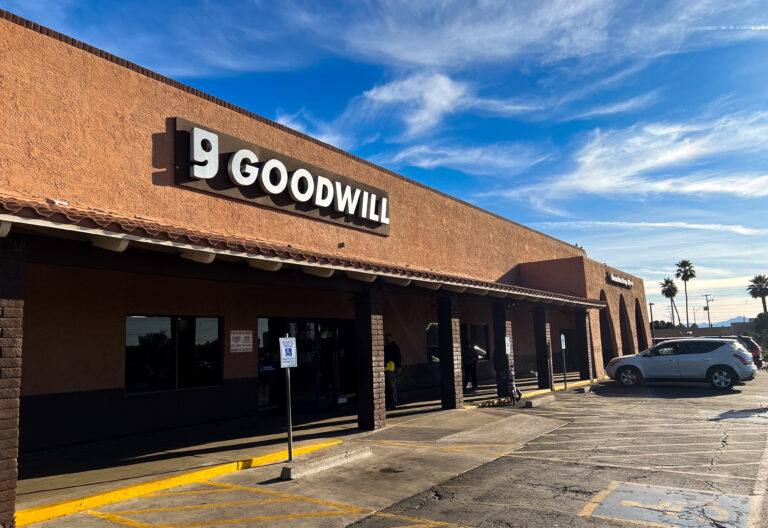
While tariffs and inflation continue to impact sales volume for many businesses, especially retailers, the one industry that tends to thrive during economic downturns is not only doing well, it’s becoming a real fashion trend. So today, let’s talk about the business of secondhand shopping.
Getting thrifty
The secondhand market grew from a value of $28 billion in 2019 to $49 billion in 2024 and shows no signs of slowing down – by 2029, the market is expected to reach $74 billion. It’s possible that the impact of tariffs, which likely won’t hit secondhand retailers for quite some time as they don’t directly rely on imports, may push consumers to secondhand shops as prices increase.
In 2025, Goodwill – the largest thrift store chain with over 3,400 stores – had a record year. It surpassed $7 billion in revenue, which is a 7% increase from the year before. As Goodwill’s chief executive told The New York Times, “We are pretty steady in almost any economic situation, but when things are tight, we’re probably more likely to get that foot traffic.”
Other secondhand retailers are experiencing similar increases in revenue. The apparel resale site ThredUp saw a 34% increase in revenue last quarter and its U.K.-based competitor Depop saw a 60% growth in U.S. sales last year. Depop, which was previously owned by Etsy, was purchased by eBay last week for $1.2 billion, and will likely benefit from the incorporation of eBay’s current infrastructure. This is sure to only help the platform grow as demand for the service is increasing.
Driven by the youth
As a senior director at Depop noted, “The appetite for vintage and second-hand fashion has moved from the alternative to the mainstream. It’s increasingly becoming a first choice, not a fall back.” And like with most fashion trends, the increase in secondhand shopping is largely driven by younger consumers, especially Gen Z.
So why exactly are Gen Z consumers choosing to shop secondhand? For starters, economic pressures are disproportionately felt by the youngest consumers, as they often haven’t yet acquired large assets, are early in their careers with lower salaries, and are more likely to experience unemployment than other age groups. In addition to secondhand shopping simply being a more financially viable option, many Gen Z consumers point to environmental issues as a motivator to shop secondhand. The fast fashion industry has long had critics of its impact on the environment, and younger generations are increasingly vigilant about shopping their values, including sustainability. Secondhand shopping allows young consumers to actively participate in fashion, express their individual style, and try on trends, without engaging directly in systems they feel are exploitative and damaging to the planet.
Nothing lasts forever
While there are certainly a plethora of reasons to shop secondhand, there are also some concerns that the current trend is beginning to replicate fast fashion, and isn’t necessarily replacing new consumption as much as supplementing it. While buying secondhand may feel more ethical to a consumer, researchers question if it could encourage more consumption, similar to the way the low price point of fast fashion has encouraged purchasing more items.
Additionally, as secondhand shopping becomes more popular, shops may begin to feel the usual pressures of supply and demand, especially those that rely on donations to operate. While economic pressures can drive consumers to secondhand shops it may reduce their ability to donate. Shops may also react to the increase in demand by increasing prices, which may push out the people who rely on those retailers the most.