
Tomorrow is Earth Day, and a variety of events are being held throughout the United States. Minneapolis residents celebrate with an annual 5K run and river clean-up, and New York City will transform dozens of streets into public pedestrian plazas.
Whatever way you choose to spend Earth Day, there’s undoubtedly no shortage of news related to planetary resources, energy, and sustainability. Here are a couple of developing topics business journalists should keep an eye on.
Support for clean energy
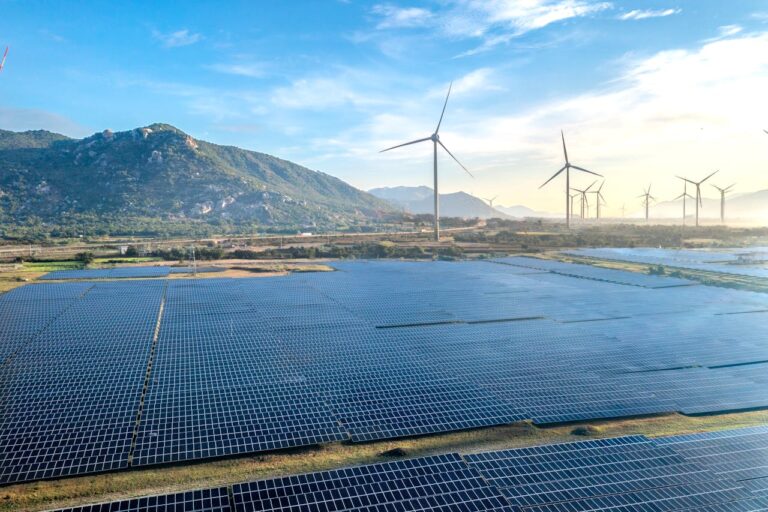
A staple of Earth Day has long been ways to use renewable energy. These options are becoming even more appealing because they have the potential to be less affected by the impact of energy disruptions due to conflict. Countries around the world have been increasing their use of such technologies for years, and this trend is expected to continue. The International Energy Agency (IEA) World Energy Outlook 2024 report projects that solar power will become the world’s largest source of electricity by 2031.
Although renewable energy is more environmentally friendly, that isn’t necessarily the main reason behind the growing adoption of these technologies. In reality, the cost of solar panels has plummeted in recent years as China has ramped up production, making the technology more affordable and accessible. While some have raised security concerns, the adoption rate of solar doesn’t look like it will slow down anytime soon. It is still growing, even in the United States, where there has been a recent push for more oil and gas production.
Usage of other renewable energy sources, such as wind and hydropower, is also expected to increase. Specifics on usage vary based on geographic location, but in general, growth in clean energy can largely be attributed to improvements in technology and the increased energy demand countries worldwide are facing, which will continue to encourage further innovation.
Increased demand and rising costs
Considering recent world events, energy is perhaps top of mind for many around the world. Oil prices saw the largest-ever monthly gain last month, amidst what the IEA has called the “most severe oil supply shock in history.” Economies around the globe are feeling the aftershocks, and those with smaller reserves are doing what they can to conserve resources. For example, four-day work weeks have been introduced in Sri Lanka in an attempt to save energy. In Australia, farmers are having to guard their fuel supplies during harvesting season and make pivots in which crops they are sowing next. Some worry about possible delayed effects, such as a negative impact on the global economy and food supply.
The current energy crisis comes at a time of already increased demand, with AI data centers rapidly popping up around the world. Some data centers are so large that they already consume more energy than a small city, and the energy consumption by global data centers is expected to exceed that of the whole country of Japan by 2030. Increased demand (without increased supply) inevitably leads to higher costs: Residential electricity rates in the U.S. increased an average of 7% last year, with some states experiencing as high as 36% increases. The power demand of all U.S. data centers is expected to double by 2028, suggesting more increases on the horizon.
Water issues and desalination
In addition to consuming large amounts of electricity, a large data center can consume up to five million gallons of water in a single day. To put it on a smaller scale, a 100-word email generated by ChatGPT uses about one bottle of water. Increased usage, record-breaking heat levels, record-low snowpack, and a sustained drought across the West have all contributed to concerning water conditions in the U.S.
For example, the Colorado River supplies water for more than 40 million people – roughly 1 in 10 of Americans – and irrigates over 5.5 million acres of farmland. Negotiations among the states that rely on it have stretched far beyond the deadline, and the Federal government is expected to soon step in to determine how water should be allocated.
As water becomes increasingly precious, some have proposed building more desalination infrastructure. Though desalination could offer a possible solution to rehabilitate the Colorado River by pumping processed seawater into the river, “it would require a lot of power to run the plants and pump the water hundreds of miles.” Some experts have noted that water recycling and conservation should be the top priority, as “wastewater purification typically uses far less energy than seawater desalination.”