
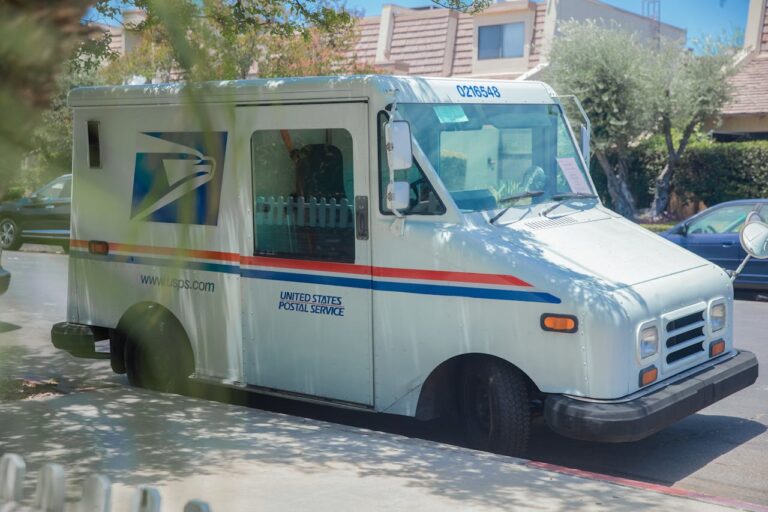
Last month, the U.S. Postal Service announced temporary price markups to offset increased fuel costs. A couple of weeks later, it filed notice of a separate set of price increases, set to take effect July 12, that would raise postage by around 5%. If you missed these announcements, you likely aren’t alone, as many Americans are unaware of how exactly the USPS operates. So today, let’s dive into what makes the USPS so unique from other government agencies, what it does for the American public, and what the future may hold for it.
How the USPS came to be
The USPS dates back before the founding of the United States. In 1775, after overseeing and optimizing the British colonial mail service for years, Benjamin Franklin was appointed the first Postmaster General of the newly transformed “Post Office of the United States.” What was once an underground communication network became the backbone of the path to democracy, even subsidizing newspapers to inform the public. In 1971, after nearly two centuries of operating as a cabinet-level agency, the U.S. Post Office Department was transformed into an independent agency to become the U.S. Postal Service we know today.
But what did that change really mean? To start, while it was once fully funded by the government, it now generally receives no tax dollars for operating expenses. To fund day-to-day operations, it relies on “the sale of postage, products and services.” Additionally, while the USPS still operates under the oversight of Congress, this change meant that management could make more of its own operating decisions and function more like a business.
A universal service obligation
The USPS is a non-profit-motivated business. Instead of profit, its goal is to make enough revenue to cover expenses while carrying out its mission to “provide the American public with trusted, affordable, universal service.” One way that mission is carried out is through stable rates. For example, from 1975 to 2025, a postage stamp went from 13 cents to 78 cents. That’s a 65-cent increase over a 50-year span that perfectly matches inflation.
Another big part of this obligation is rural delivery. People in rural communities – roughly 25% of the U.S. population – depend on USPS. Other delivery companies, like UPS, FedEx and Amazon, typically won’t offer service where it is not profitable (and roughly 70% of USPS routes are unprofitable), so it’s often only through partnerships with USPS for final mile delivery that residents in these areas can receive mail.
Over its 250 years of operation, the USPS subsidized the transcontinental railroad and the development of airlines, making the widely accessible transportation we know today possible. It also has a history of getting creative to carry out deliveries, such as using reindeer with sleds in Alaska in the early 1900s, mules to deliver to the bottom of the Grand Canyon, and snowmobiles in harsh winter weather. Even as the world becomes more digital, the public continues to depend on USPS for the timely delivery of medicines, bills, and ballots. During the years that followed the COVID-19 pandemic, the USPS delivered over 900 million COVID tests, “with an average of just 1.2 days from shipment to delivery.”
The future of mail
As fewer people rely on physical letter mail, postal services in other countries are cutting back or stopping services altogether. While the USPS continues to operate with prices “among the most affordable in the world,” serious financial constraints have been added over the years that have some worried about its longevity. For example, its federal borrowing limit has remained unchanged since 1992 and a 2006 act required it to prefund and overpay into pensions. A 2022 act, intended to ease the financial hit of the 2006 act, also introduced the added expense of mandated six-day delivery for mail and packages. Without any changes, the USPS could run out of cash in less than a year.
Though some have proposed privatization as a way to make the postal service more competitive, it hasn’t always worked in other places, and doing so would likely only hurt the communities that rely on USPS as “the great equalizer” that binds the nation together. As one lawmaker put it, “Americans in every part of this country rely upon and really deserve prompt, reliable and efficient mail services. We cannot lose the postal service as we know it.”