

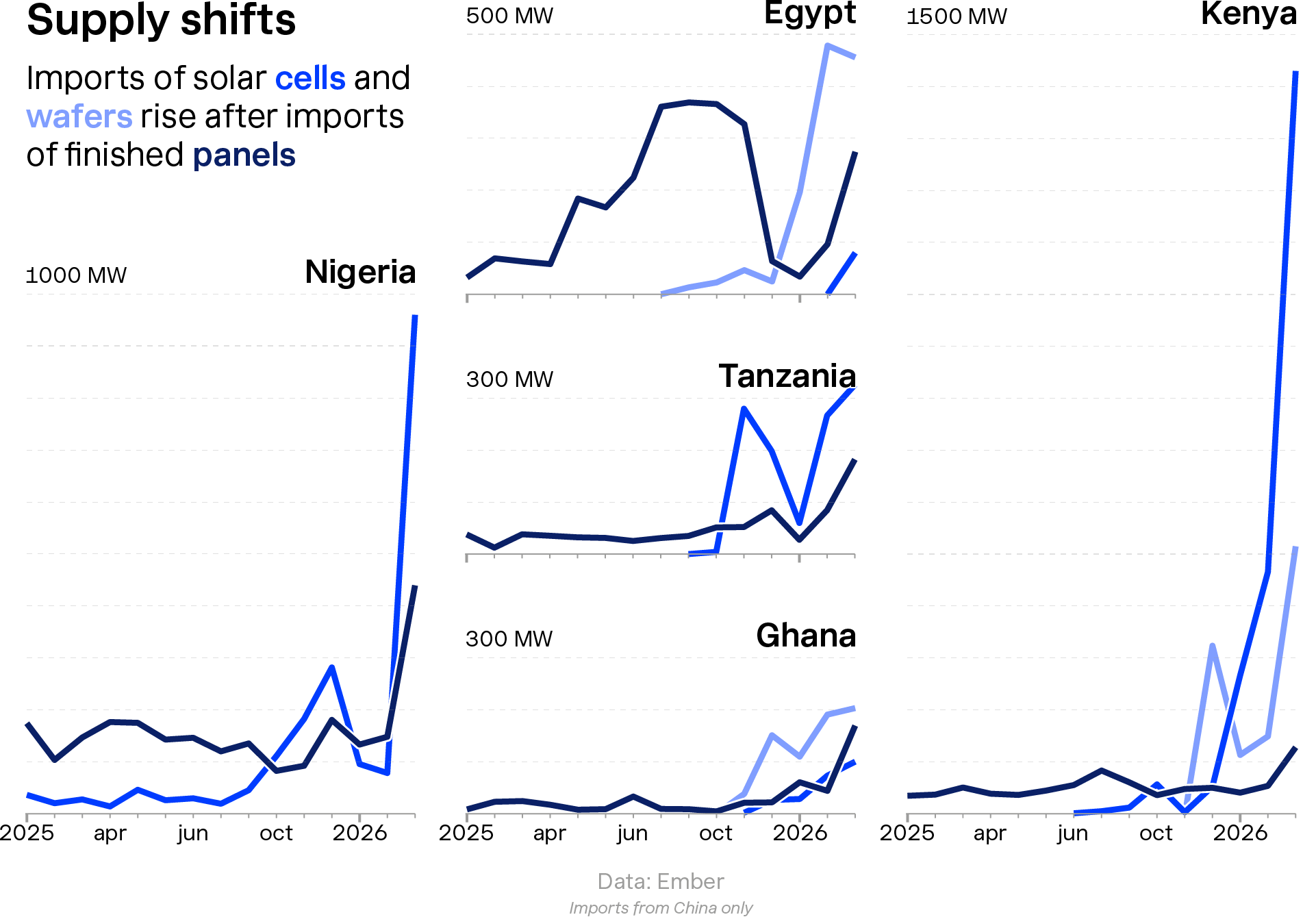
The continent has imported more solar components than finished panels so far this year.
Obinna Iruoma doesn’t mind sweating a bit as he serves customers at his pharmacy in hot-and-humid Lagos, Nigeria. But the heat is a problem for his stock of vaccines, which must be kept constantly refrigerated to remain effective. And last fall, his generator – his only source of power – broke.
In the past, Iruoma would have rushed to repair or replace the generator, continuing to pay for fuel and enduring the droning noise. But as solar technology prices have continued to fall in recent years while fuel prices in Nigeria have risen, a new solution has become obvious.
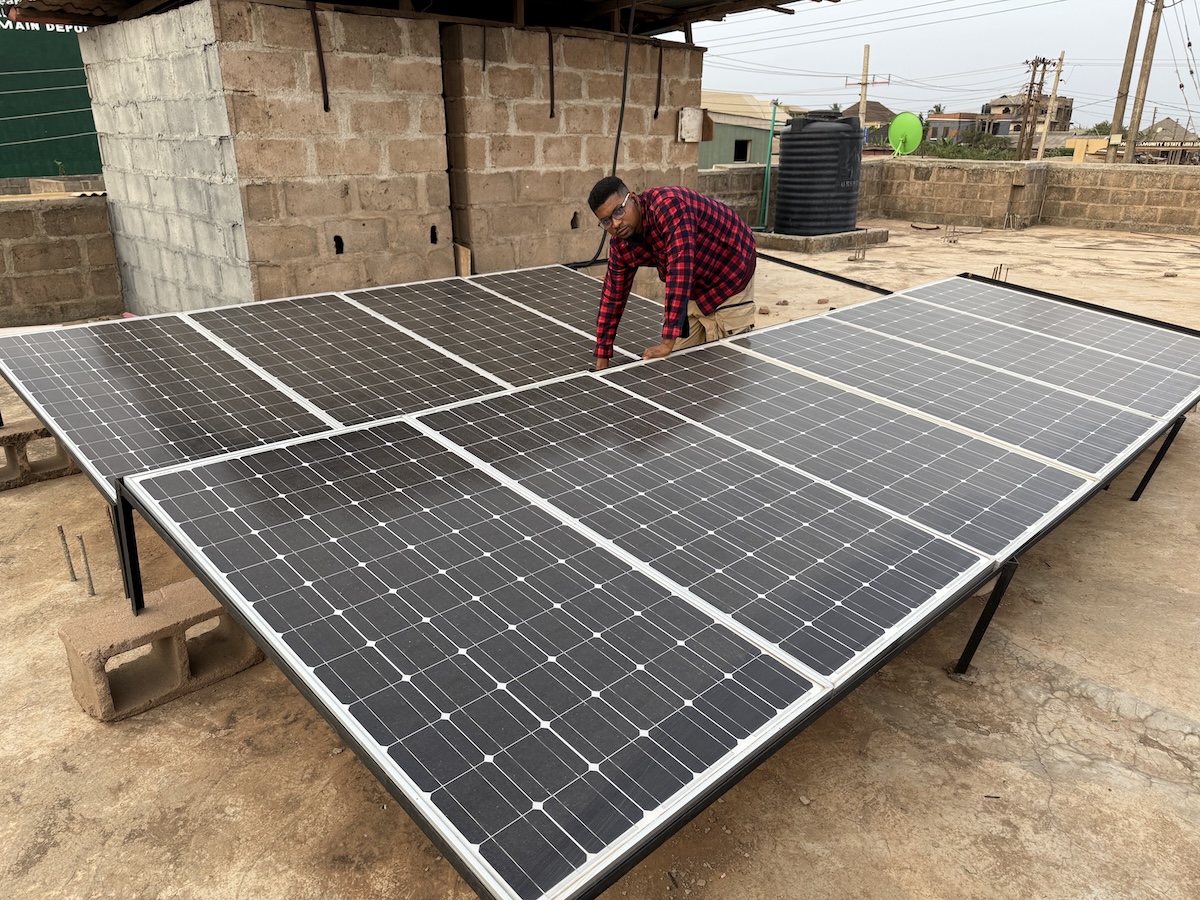
In October, Iruoma bought 16 new solar panels for the pharmacy, as well as a battery and an inverter. “It has been a great decision,” he said. “We have not bought fuel or run the generator since we switched to solar, and the stress of running the generator is no more.”
He has become a solar convert. “Solar is better. You cut costs, reduce noise and carbon, and become power independent,” he said.
Across the whole of Africa, governments, households and businesses appear to agree. From Nigeria to Kenya, Egypt to Botswana, solar imports from China – which dominates global production – are skyrocketing.
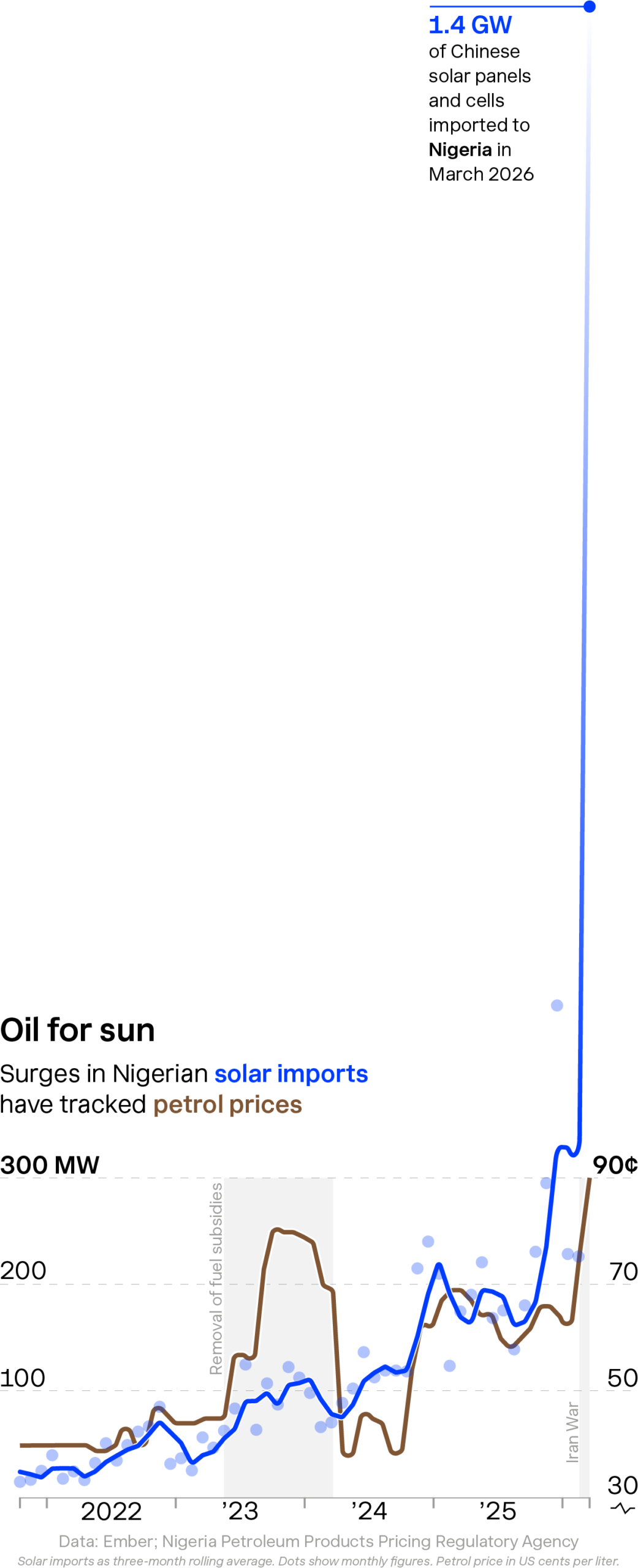
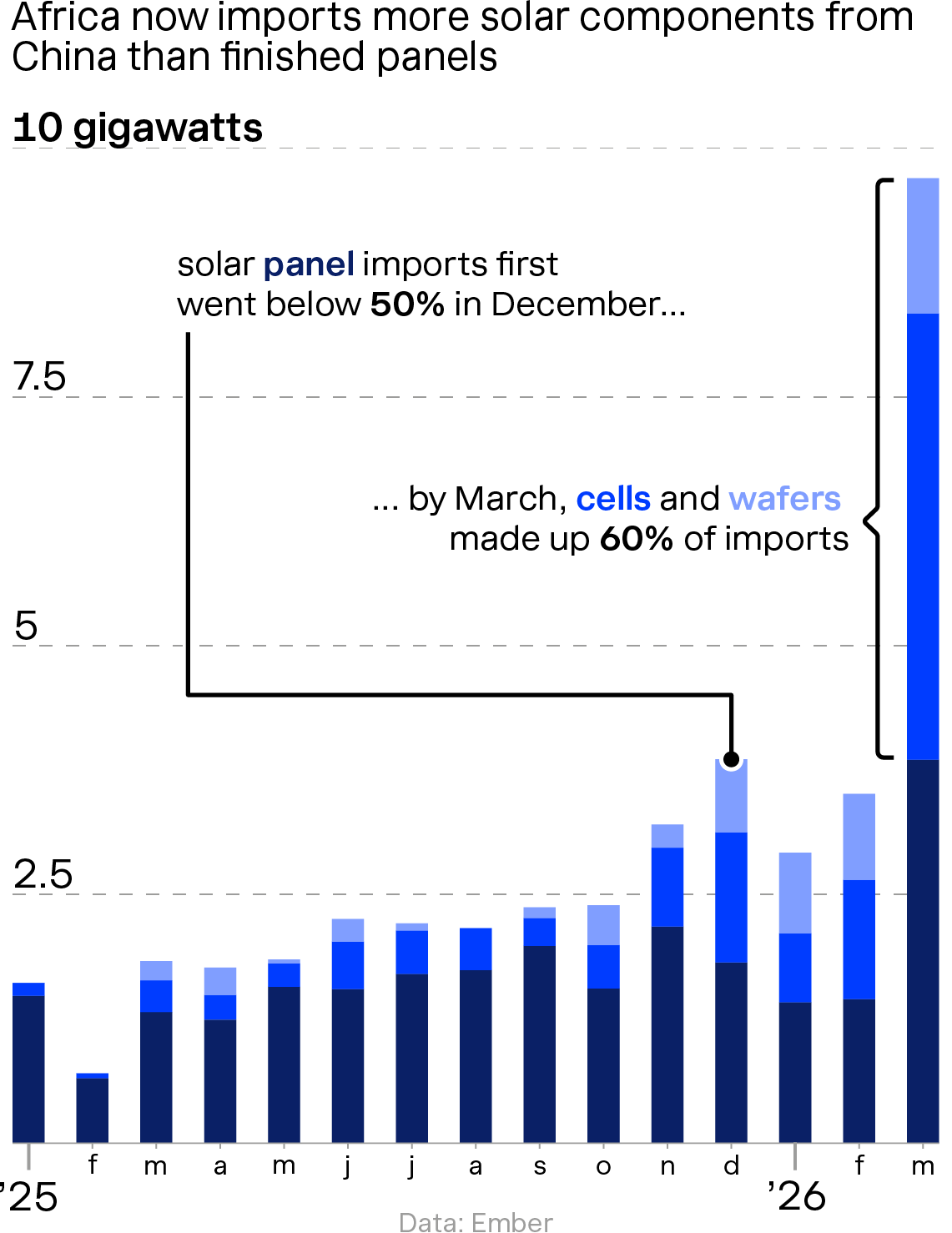
In 2023, the continent imported 9.9 gigawatts of solar capacity from China, according to data collected by energy think tank Ember – enough to power New York City in the summertime. This March, as fuel prices jumped from the effects of the U.S.-Israeli war with Iran, the continent imported nearly the same amount in just a month.
On its own, this rapid growth in cheap, clean and reliable electrification could be transformational. Eight in ten people without electricity live in sub-Saharan Africa, where a rapidly growing population is outpacing new grid connections and only a third of hospitals have a reliable power supply. Ending poverty is seen as impossible without it.
Buying to building
But look deeper at Africa’s solar data, and what could be an even more significant story is at play. Growing demand for solar panels has given business leaders confidence to move up the supply chain, choosing to build the panels rather than buy them. For the first time at the end of 2025, Africa imported more solar cells and wafers — components used to build finished panels — than panels themselves. As well as electrifying the continent, solar power may help industrialize it, too.
“We are seeing this huge growing interest from local enterprises, local conglomerates, local state-owned enterprises, wanting to look at potential investments in solar manufacturing,” said Divyam Nagrapal, who leads a U.N.-backed initiative seeking to foster an upswell of green industrialization across Africa.
African green technology publication Renewables Rising estimates that over 30 gigawatts of annual manufacturing capacity could soon be in operation. For Muyi Yang, a policy analyst at Ember, “the most important thing for Africa” is to use the momentum to create “spillover” and support the rise of other manufacturing sectors, too.
So far, solar manufacturing efforts have centered on assembling imported components. Once a sufficient manufacturing ecosystem is in place, though, “you start to have enough demand to start looking at the raw materials,” Nagrapal said. Glass manufacturers could begin to specialize in higher-value panes for solar panels. Cable manufacturers could expand production to direct-current cables for solar arrays. More value from the continent’s silver, copper and silicon mines could be kept within Africa by being directed into renewables manufacturing rather than exported overseas.
In the best-case scenario, harnessing the sun could lead Africa into a future of expanding green growth, where cheaper electricity supports higher manufacturing output in a virtuous cycle, according to Nagrapal. Clean and abundant power would help farmers to irrigate more land with electric pumps and get more value from their produce by allowing for full refrigeration chains from field to market; skilled manufacturing employment would support the continent’s fast-growing young population.
Seeds of growth
Significant challenges remain for this cycle to become a reality. Where financing options for simple solar farms in Africa are well established, Nagrapal said, finding seed capital for solar manufacturing projects is more difficult. “Finance is that one big, big, big piece,” he said. As for Yang, he worries that political instability and a lack of governance capacity will derail the long-term strategic planning necessary to realize the cycle’s full potential. Yet another challenge is remaining cost-competitive with China’s extremely cheap exports.
The challenges may not be insurmountable. Nagrapal suggests African countries could charge higher import duties on finished panels than on solar cells and wafers, incentivizing domestic production. South Africa implemented such a tariff structure in 2024, and in 2025 Nigeria briefly considered banning finished panel imports entirely. Yang wants to see European companies and institutions partner with local industries to accelerate best practices. “They have spent many years on this continent,” he said. “They have the knowledge and expertise about how things work, and they understand how to navigate local complexity.”
For European companies to be importing expertise rather than exporting resources would be a huge turnaround for Africa’s solar industry. Just ten years ago, European interest in large-scale solar development on the continent was seen largely through the lens of extracting sunlight from the Sahara to help power Europe – while Africa remained woefully under-electrified.
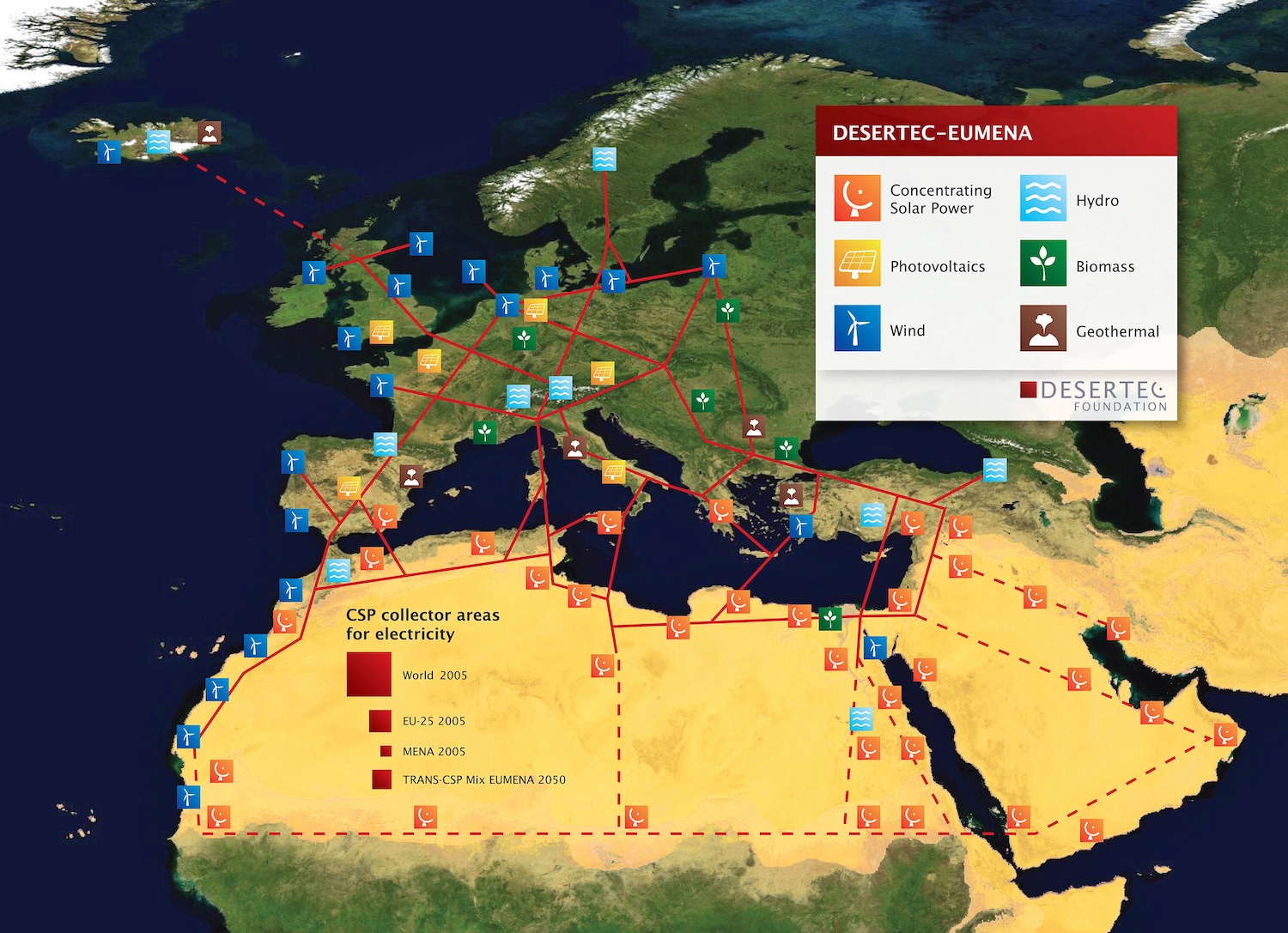
The idea was formalized in the Desertec framework, with a map published showing solar developments across the Sahara desert linking to the European grid. The map had “arrows showing how energy will be funnelled to the north,” an African Network of Solar Energy Co-Founder Daniel Egbe told the BBC. “But there was no arrow pointing down to sub-Saharan Africa.”
Now, Africa is charting a course in which it is not only the beneficiary of bountiful sunlight, but also produces the technology to capture it. At the Africa Forward Summit in Nairobi in May, African heads of state committed to “Powering Growth Through Green Industrialization and Energy Transition,” bystrengthening “regional value chains through continental integration and ‘Made in Africa ’ production.”Europe, meanwhile, has lost its footing in solar manufacturing almost entirely. “Fundamentally, it is an Africa for Africa story,” said Nagrapal, though some African solar factories – including a large solar cell facility in Ethiopia developed by Japanese manufacturer Toyo Solar – are being built explicitly to avoid U.S. tariffs on Chinese solar products.
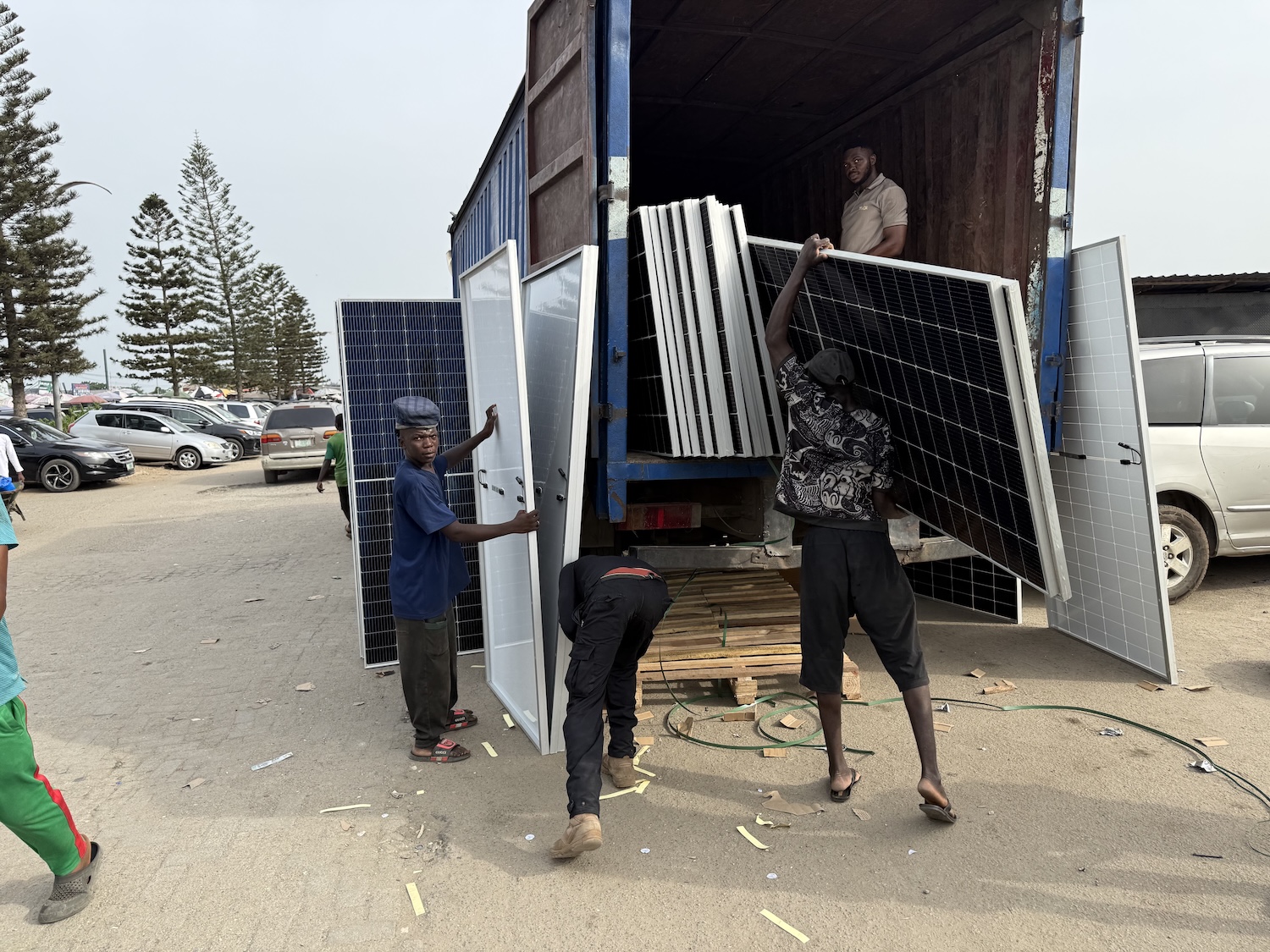
Whether or not that story can be fully realized, the continent’s demand for electrification is likely only to grow. As fuel prices in Nigeria soared to their highest recorded level this March, the manager of a solar installation business in Lagos’s Arena Market, Kingsley Ibe, said: “I have been doing this business since 2019, and I have never seen this increase in the demand for solar systems.”
Success was not always guaranteed for Ibe’s business. In the midst of a global fossil fuel supply crisis, though, he was confident: “Solar business is now a lucrative business,” he said. “It is the future.”
Additional reporting in Lagos by Kelechukwu Iruoma.