
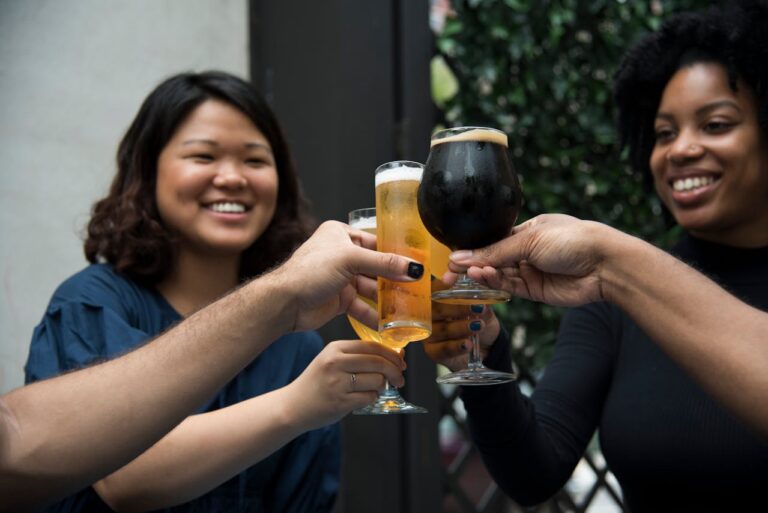
Today is St. Patrick’s Day, and while some cities celebrate by dyeing their rivers green, many individuals celebrate with a pint of Guinness. While Guinness may not fit the taste palette of every beer drinker, there are plenty of craft beers available across the United States for anyone to celebrate this holy day in a not-so-sacred manner. So today, let’s talk about the craft beer industry and its latest twists and innovations.
The craft beer industry
The Brewers Association defines craft brewers as small independent brewers who produce less than 6 million barrels of beer a year and are less than 25 percent owned by a non-craft brewer, such as Anheuser-Busch or other major brewing company. However, it isn’t just the size of the production that makes a brewery a craft brewery. Rather, the “hallmark of craft beer and craft brewers is innovation.” Craft brewers “interpret historic styles with unique twists and develop new styles that have no precedent.”
This aspect of craft beer has certainly helped the industry grow quickly, as it attracted many customers who were used to seeing the same beer options on the shelf and wanted to try something new. This may also be why large brewers started purchasing many of the early successful craft breweries, to blur the lines between craft and non-craft beer and profit from the new craze. As more and more players entered the market seeking to make their mark on the beer world, the Brewers Association established a certification to help signal to customers which breweries were truly independent and unify craft brewers across the country. In 1985, there were about 100 craft breweries operating in the United States. By 2018, there were more than 7,000.
What goes up must come down?
A recent headline stated the “craft beer boom is over” because the “volume of beer made by craft breweries fell 5 percent in 2025,” and it was the “second year in a row that brewery closures outpaced openings.” However, that doesn’t necessarily mean craft breweries are bound to fail; rather, the industry is evolving and adjusting in real time, and simply opening a taproom won’t guarantee success. Instead, the industry is “maturing,” and owners are discovering that craft beer isn’t the only product they can sell. In fact, it is other aspects of their business, such as hospitality, food, and trivia nights, that may drive demand for their beer rather than the other way around.
Run clubs – where people meet up and run together – in particular have exploded in popularity in recent years, and breweries have found that hosting these clubs helps create a regular customer base and a stronger connection with their local community. For example, a craft brewer in Portland decided to host her own run club and found that “once they get to know each other and people at the brewery, it makes stopping in for a beer outside of run club all the more alluring.” While Tuesdays were once the slowest night of the week, they have now become the busiest, thanks to the community built around the run club.
By women, for women
Another way craft brewers have grown in the tightly-packed industry is by appealing to women. Beer companies have in the past produced sexist ad campaigns and given their beers offensive names, making it clear that men are their target demographic. This often pushes women away from those products, even if they enjoy the taste of the beer itself.
While the beer industry still caters heavily to male consumers and brewing itself remains predominantly male-dominated, there are female pioneers breaking into the industry and carving out a long-term spot for themselves and female customers, which should change the industry for the better. New York City’s first women-owned brewery opened in 2019, and now has five taprooms across the city. The brand focuses on collaborating with other woman-owned businesses and uplifting women’s voices in business – a mission that clearly resonates with its customers.
Additionally, some breweries have simply realized that women are an untapped consumer base that will most certainly benefit their overall business. As one industry expert told a BBC reporter, “If you take women’s preferences into consideration as a beer company, you will also attract male consumers who just don’t like the existing products. You will also speak to people who weren’t being served.”