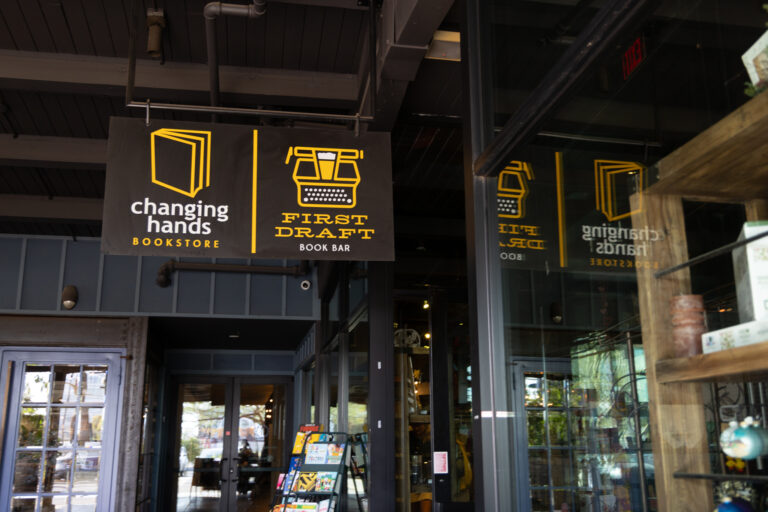
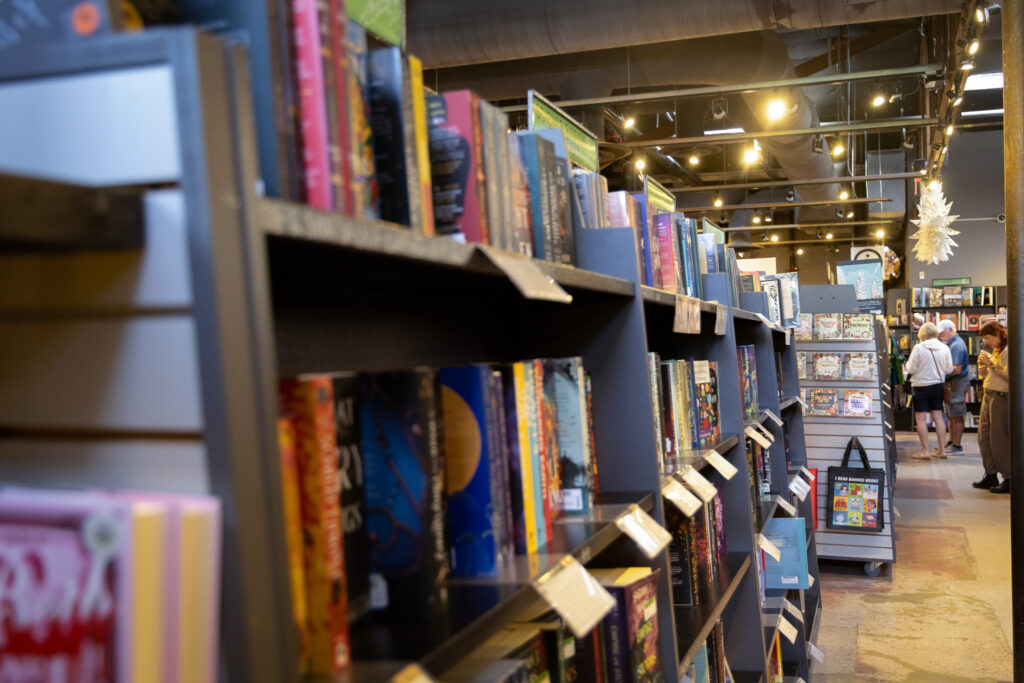
The tall sign for the Newton retail complex casts faint shadows against a blue sky. Half obscured by desert shrubs and parked cars, Changing Hands Bookstore sits back from the street. Inside the Phoenix location, the air carries the faint scent of candles, dry and earthy. Cindy Dach, the owner, moves between the bar, the shelves and the people coming and going. “Our goal is to be a community gathering space where people see themselves and feel that they belong here,” she said.
Changing Hands began in 1974 as a small used book store and, over time, became a major hub for author events. Dach came in 2000, when Phoenix was still treated as a flyover stop, the kind of place New York publicists would skip over or ask how close it was to somewhere else. But the city was changing, and so was the store. “I’m just a steward of story and space,” she said.
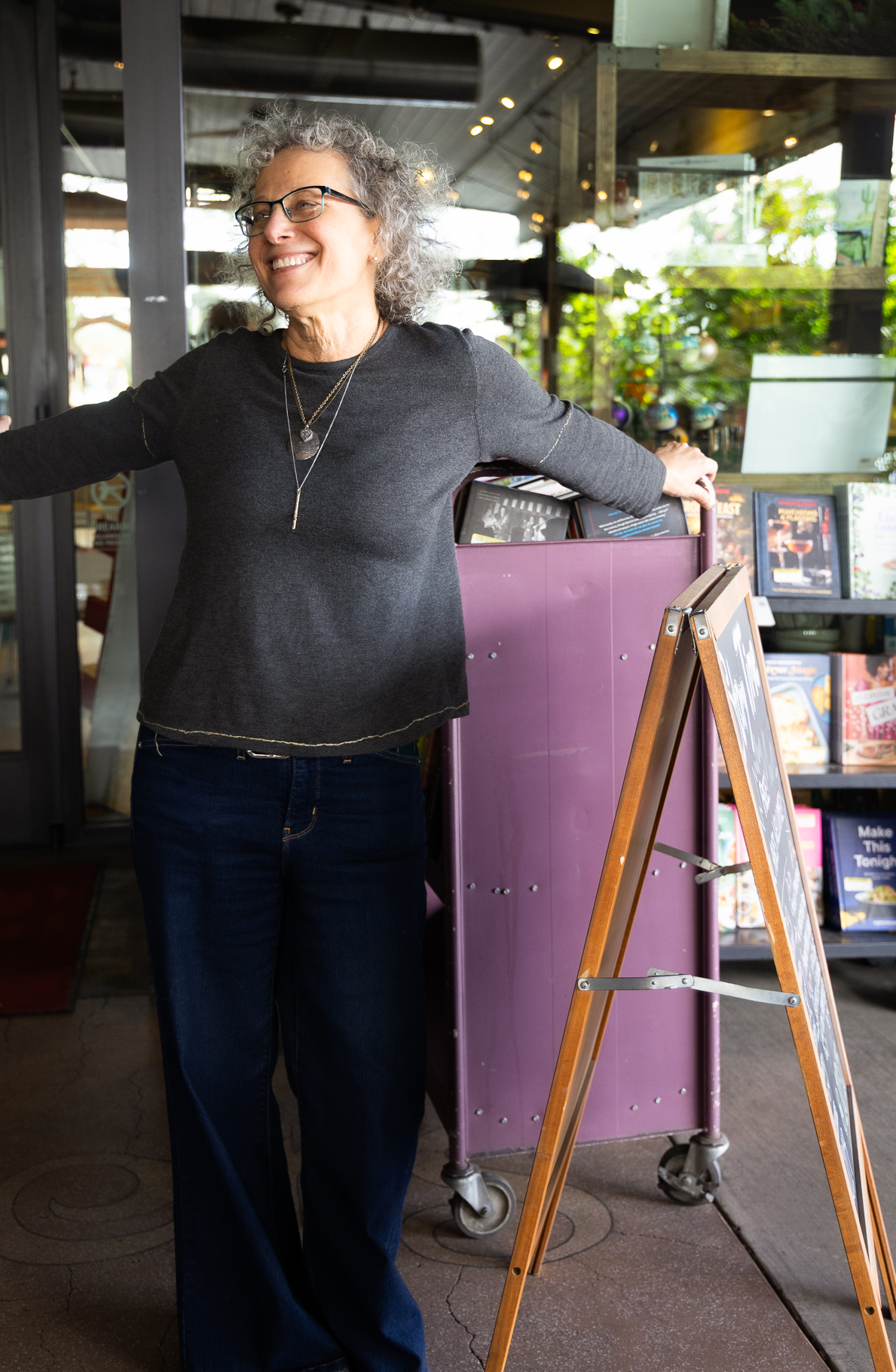
That sense of space also shapes how the business works. The margins on books are thin, often between one and 5%, according to Startup Financial Projection, so the store is built around multiple streams of revenue. New and used books make up most of the store’s sales, supported by author events, gift merchandise and, at the Phoenix location, the First Draft Book Bar. “This just felt to me like what a bookstore of the future will look like,” Dach said.
The used book trade remains central to that structure and to the store’s name. Customers bring in books they have finished and receive store credit. The inventory is constantly shifting, with used titles making up about 35 to 40% of book sales. It also creates a wide range of prices across the store, from low-cost paperbacks to new hardcovers. “That price is essential and allows, again, anybody to find the book in my store,” Dach said. “I’ve got $4 books. I’ve got $50 books.”
At its core, the struggle to keep a bookstore like Changing Hands open is an economic one. Independent shops operate with a built-in disadvantage. Publishers typically offer wholesale discounts ranging from about 40 to 55%, with higher discounts required for broad distribution, allowing it to sell books at prices smaller stores cannot match. The imbalance has shaped the business for decades, first through big-box chains and now through online dominance. “Amazon … they cut our heads off and they cut our knees off,” Dach said. “If customers want spaces like this to exist, they have to support it, even if it means they’re paying $5 more a book.”
Alongside that, Changing Hands hosts more than 300 events a year, from author talks to community gatherings. The events are tied to sales, but they also create a reason to return, to stay, to be part of a room. “Amazon doesn’t have author events, we can’t give you a picture with an author. You can’t get a signed book,” Dach said. “We are offering experiences that may combat the loneliness.”
If the business is built to sustain the space, the culture is what gives it life. Amanda Atlan-Kinasz, the general manager, describes a team shaped by shared enthusiasm. Many are recommending books from their own reading and passing them along to customers. “I joke sometimes that I’m in the world’s friendliest cult,” she said. “They have such a passion for books and for this community.”
That atmosphere carries into the idea of the bookstore as a “third place”. Customers arrive for a book and remain for a conversation, a quiet hour or the presence of others. “It really helps with the kind of idea of Changing Hands as a third place, a place that’s not work, it’s not home,” Atlan-Kinasz said. “They’re invited to linger in that space.”
What happens inside the store does not stop at the shelves. Changing Hands has taken clear positions, from its response to book bans to its decision to close for a day of protest. “We are going to make it very clear who we are and what we stand for,” Atlan-Kinasz said.
For Catherine Alonzo, a longtime customer and a consultant who hosts the monthly “How the World Changed” book club at the store, that is part of what keeps people coming back. Her group, which draws about 20 regulars, meets to discuss nonfiction on topics ranging from economics to social change. “They know who they are, they know why they exist, they know what they think and they’re never afraid to stand up for that,” she said.
Even with that model, margins remain tight, with bookstores often operating on profits of around 2% of revenue. During the pandemic, when customers stopped coming through the doors, Changing Hands depended on federal relief to survive, especially the Paycheck Protection Plan (PPP) designed to help small businesses weather the crisis. “If I had not gotten PPP money, I would not be here,” Dach said.
The pressures continue, from rising rents to the cost of staff. Online sales present another challenge. “If you go on my website, it’s just not as easy as going on Amazon’s website,” she said. “I know I lose people.”
Looking ahead, Dach points to more events, new ways to bring people into the space and closer attention to what the community needs. “I’ll keep adapting as I need to adapt,” she said.
“A great book changes minds. That’s constant,” Dach said. “I’m just so grateful to be a steward of that.”