A party of intrepid heroes came to an ancient mining outpost in the mountains, blocked by a large, obsidian door set into a mountain face. The group was on the hunt for answers: they needed to figure out what was causing a rise of strange phenomena around the town of Phandalin. Enraged goblins with glowing features, psychic powers and a nasty habit of exploding when mortally wounded were on the rise.
It’s not the plot to a new TV show or movie. Instead, it’s a story being told by a group of people sitting around a table at Funkatronic Rex Games & More in North Phoenix. They are members of the Dungeons & Dragons Adventurers League (D&D).
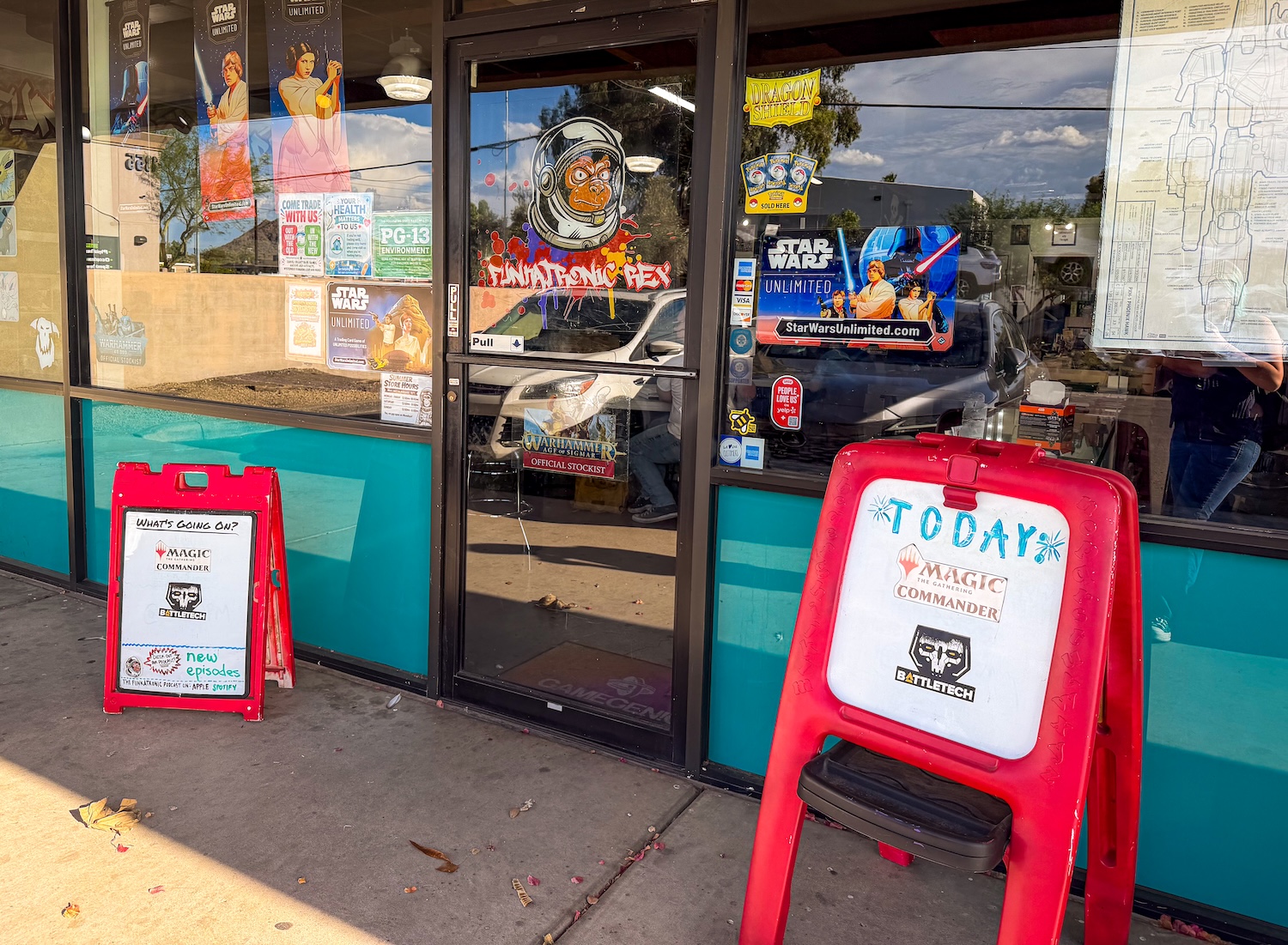
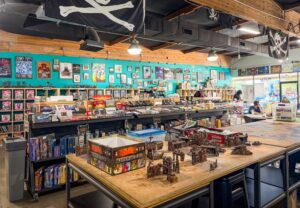
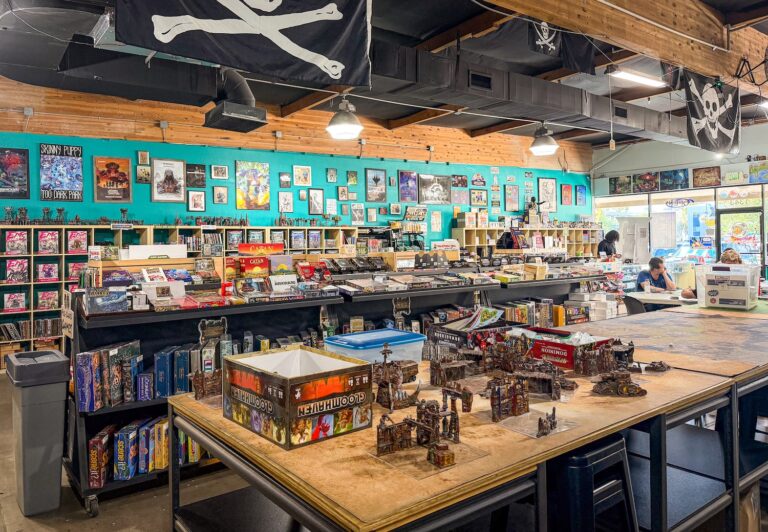
The owner of this game store is Mike Laza, a Phoenix native who was working as an audio engineer in Los Angeles when he says the origin story of Funkatronic Rex began with “[a] broken leg and boredom.” Constrained by his lack of mobility, Laza rediscovered his old hobby of “Magic: The Gathering” (MTG) – a collectible tabletop card game, and began the hunt for a “nerd shop” that stocked the cards.
What he found was a surprise. Gamers no longer were forced to gather outside a shop or find some other location to play: now the shops were providing space to play as well as to purchase – creating an official space to build community.
“Somewhere in the interim of like 15 years of life, this business model grew up and became a thing where like… you’re a retail space, but you provide gaming space and you just become a third space,” he said. “And it literally blew my mind.”
Laza moved back to Phoenix a few years later, and in 2017, opened his very own game store named after an old musical pen name that “didn’t have enough road wear.”
The pandemic and the industry boom
The timing of the opening – just a few years before the COVID-19 pandemic – could’ve been a curse, but Laza said it was a blessing: not only did it boost his sales, but it fundamentally altered the gaming industry as a whole.
“[Tabletop gaming] was already in a growth phase and then pandemic just kind of gave it this weird booster shot that it didn’t really need, but really exploded the industry, for good and bad,” he said. “It’s been hard to keep up with it since.”
These industry observations are corroborated by Hasbro, the toy manufacturing and entertainment holding company that owns properties like D&D, MTG, and many more. While discussing developments from the coronavirus pandemic in its annual report from 2021, it reported that the company “experienced accelerated growth in our ecommerce, and in particular, sales of games,” as well as “increased interest in our Wizards of the Coast table-top gaming and entertainment content, as consumers were searching for entertainment options during the pandemic.”
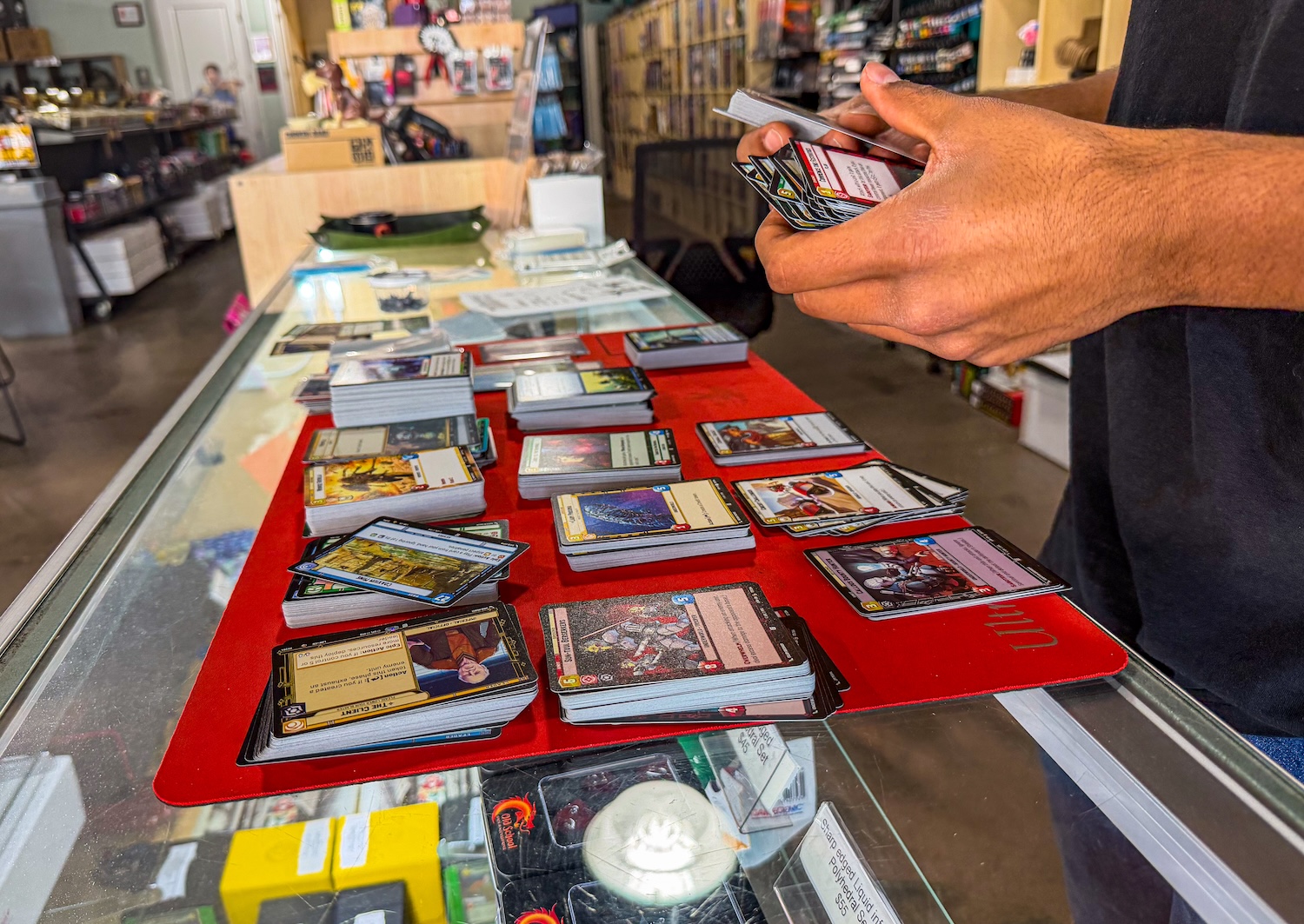
This now oversaturated gaming industry has created an environment where there’s a game out there for everyone. But that makes it difficult for a game store to determine what to stock and how best to cater to its clientele.
“We want to provide a space where everybody’s welcome and everybody, even if we’re not playing your game system, you get the shimmer of like ‘ah, but these are my people, these are my nerds,’” Laza said.
Funkatronic Rex’s sales are also heavily driven by the cyclical nature of game releases, doing particularly well when games get new editions or pre-releases. Laza says much of this is driven by a “shiny new” mentality, and as soon as something loses its newness, it tends to linger on the shelves. Unlike many other products, board games hold onto their value over a meaningful amount of time. But Laza says that in practice, with board game aesthetics changing over time and constant new things, it’s a difficult balance to strike to have something for everyone while avoiding turning into “a board game museum.”
“If you build it, they will come.”
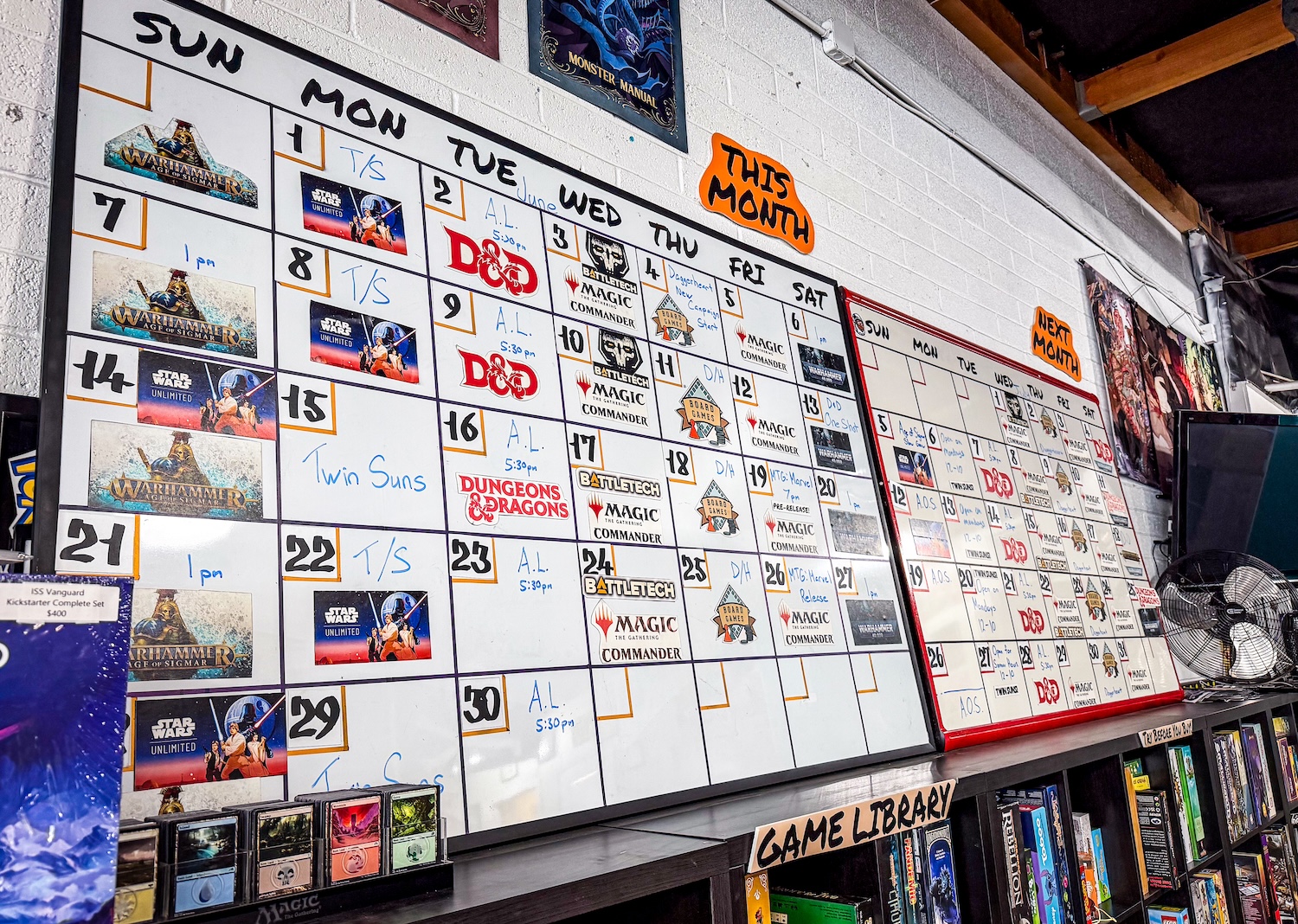
Aside from actual sales, Funkatronic Rex is also fundamentally a community space, an aspect that has to be considered in conjunction with the business. The store hosts constant weekly events tailored to different nerdy niches, including RPG nights like D&D and Daggerheart, as well as nights for MTG, wargaming, board games and more. While Laza said it’s difficult to quantify how much revenue is driven by events over sales, the events generate word of mouth that can drive more attendance, creating more returning customers.
Ruben Mencado is one such gamer who has been coming back to the store for a year and a half to play MTG.
“My first day when I came here, everybody was very welcoming. They were like, ‘Oh, you’re pretty new, what’s your name?’ And then we just started chatting and all that, and then I set up my first game,” Mencado said.
Alex Sproch first visited the store eight or nine years ago, and was so impressed by the community of people around it that he became a member: he has worked at Funkatronic Rex for the last six of those years.
“When I first started working here, I realized that this business, our specific store, really lives and dies by the community,” he said. He first came to the store for the competitive MTG scene, but meeting Laza made him appreciate the community aspect more and more.
“I realized, when I was playing with him, it was the most fun I’ve had playing this game that I’ve been playing for years,” Sproch said. “The atmosphere, the people I was playing with mattered more than the actual mechanics of the game itself.”
For Hiroko Hoshino, a popular Dungeon Master, or facilitator and storyteller in a D&D game, it isn’t just the fact that the community is there, but the diversity of people – coming into the store with different tastes in games and from a variety of backgrounds and generations – makes it an electric environment.
Her table at the Adventurers League often has a core group of regulars and occasionally some drop-ins looking to play. In Hoshino’s last game, Adam, a soft-spoken man with near-encyclopedic knowledge of the game, had his goblin wizard/cleric Mim turn half a mess hall of enemies into a divine meat shredder with a single cast of Spirit Guardians while flying back and forth on a broomstick. When Steely Dan, the rogue, was almost pushed into lava, his twin brother, Smashy Dan the barbarian (played by Michael and Chris respectively), instead pushed the enemy into the lava himself, a move that had both the in-game characters and the real players cheering. Pavia, the elf bard, inspired her compatriots to hit harder and boost their luck, while her player, Maureen, showed off a small red dragon figure to the table.
“I feel like gaming is for everybody, and that’s one of the great things about [Adventurers League] is that there’s people of all different ages and everything,” Hoshino said.
“I think it’s good for everyone to realize how many perspectives there are here.”