

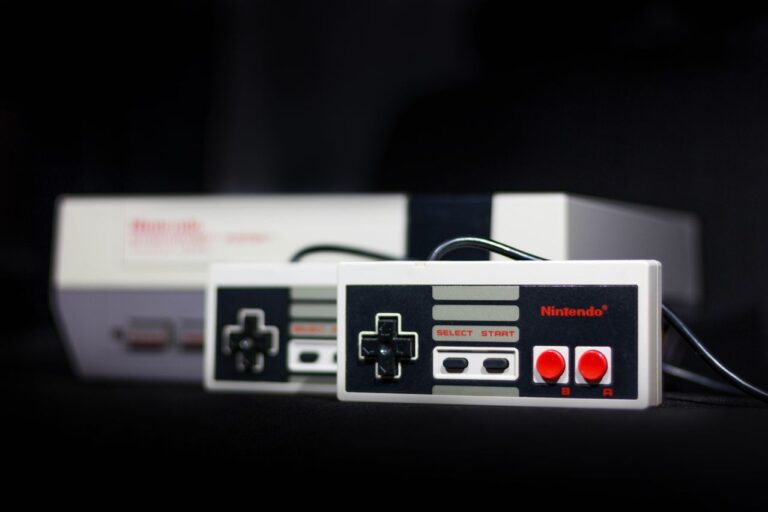
Libraries don’t just collect historical artifacts, books and movies. Over the decades, archivists have also stored digital gaming software and trending video game titles.
But a new digital frontier is putting those retention efforts at risk.
Sony Group Corp. announced in July it will end physical disc production for its Playstation gaming console by 2028, meaning game software will be available only by downloading it from company servers. Future consoles will no longer have a disc drive.
Microsoft Corp. followed up Sony’s press release with its own announcement of a disc-to-digital feature, which would give owners of discs a digital license of the game as well – a move more focused on embracing the physical media. Testing for the feature is underway.
Companies’ turn toward fully digital production isn’t surprising news. Physical game spending fell 11% in 2025 compared to 2024, according to industry analyst Mat Piscatella from Circana. But the temporary lifespan of games, a product of constant updates and server maintenance, makes it difficult to retain the original copy, or even preserve the game itself.
Digital archivists and academics are concerned about how the changing landscape will affect video game preservation for archives and broadly for the consumer. Still, some remain optimistic of community involvement and ongoing conversations with industry members.
A 2023 study by the Video Game History Foundation and the Software Preservation Network found that only 13% of all video games are commercially available, only three percentage points higher than salvaged pre-WW2 audio recordings.
In history, the video game industry has never made more than 20% of video games available for purchase.
“For the first time, something that’s in the hands of a significant part of the global population could disappear in an instant if one person somewhere makes the decision,” said Torsten Reimer, the dean of the University of Chicago Library.
Video games give academics a snapshot of a cultural era, and are part of a long line “the most ancient forms of human expression,” said Laine Nooney, a professor at NYU. They also said games often remain at the front of innovation in digital platforms, such as microtransactions.
“Games always did it first,” Nooney said. “Understanding that history, I think, is an important part of understanding our history of transformations in the economy, in labor, and technology, and leisure time, and domestic life, right? Games are connected to everything.”
But issues with video game preservation didn’t just start because disc production is ending at Playstation, Nooney said.
“There were many things that you did not own the right to do with that material, even when you had a physical disc,” Nooney said. “The risks economically to Sony, I think, are fairly limited, and the preservation problem continues in a way that is, I think, not that different from the circumstances we were already in.”
The problem mainly lies in how newer games transitioned into full online dependency. They now run on servers and get multiple updates or patch notes, meaning the disc a consumer gets may not be playable until extra content is downloaded.
Groups like Stop Killing Games are particularly focused on the online-dependent format, garnering over a million signatures to keep servers alive after the end of support.
At the University of Arizona, the Learning Games Initiative Research Archive stores video games, consoles and cultural items like magazines. Ken McAllister and Judd Ruggill started the archive to preserve not just the software, but the cultural impact the game left behind. So far, they’ve acquired thousands of games and more than a hundred consoles.
But they aren’t in the market of hoarding games so they can collect dust.
“It is our own sort of gonzo nature,” Ruggill said. “A part of our archival philosophy is preservation through use.”
On the other side of the country, the University of Chicago Library Games Collection follows the same philosophy, collecting games for students and scholars to engage with.
Kent Lambert, Associate Director of the MADD Arts Labs, said their focus is on usage as well, but they’ve also talked with developers and industry experts on ways to preserve media.
“Nintendo, Sony, Microsoft – they are doing work to preserve their own games, but the terms are very limiting, both for consumers and certainly for institutions like our own,” Lambert said. “How can we, as an institution, engage, collaborate in that work? Are there pathways for us to do that?”
But Lambert also said the work for companies to preserve their games, which is something he spoke with an archivist at Sony about, is a “gargantuan effort.” He said his institution is trying to find ways to help in that effort.
Methods to preserve
There are some methods of preservation Lambert said they use to add games to their catalog, such as the Steam PC Café feature to mass share game licenses. They also reach out to developers for access to their software.
Another solution libraries and academics point to is emulation. Game emulators mimic original video games to recreate an experience while not using original files or code.
Eric Kaltman, a professor of media and technology studies and history at the University of Alberta, said fans are leading the effort.
“The hobbyist community creating essentially commercial-grade emulators that can support the interpretation of this old data is absolutely essential to my research and a lot of the work that I know people are doing,” he said.
Fan communities have even revived old components of games through its original code, rather than complete replication. Project Sunrise is an initiative to revive unplayable content from Destiny 2, an MMO shooter, that’s been “sunsetted,” or removed from the game to save space for newer content.
“I got very nostalgic about playing back in the day when I was in school, and all of those old maps that I loved very much were all gone.” said Stanislaus Jusek, the creator of the project.
Since he started the initiative, Bungie announced this September it is planning to revive vaulted content in future updates amid community backlash.
The U.S. Copyright Office did review whether or not to exempt academics so they can offer remote play for unplayable games, like those that lose server management. But this push failed in 2024 when the office sided with the industry, as opponents argued the move could “present a serious risk to an important market,” according to the final decision.
Potential litigation pushes academics like Lambert away from modifying software and more toward other avenues of preservation.
Lambert said there are worries that tampering with the software could violate copyright laws, but he wants to look at ways to backup software through fair use.
“It’s not something I take lightly,” Lambert said. “But I hope that we can start to very thoughtfully find ways.”
Kaltman said there are many games that will disappear and are nearly impossible to retain.
“The most popular games that exist are, in some sense, unpreserveable, because they constantly update, they are constantly changing, and so the best way we found to actually figure out what’s happening is to go back to how you would have done historical research in the past,” Kaltman said.
One of these alternatives for historians is capturing moments of gameplay, or finding footage on video platforms like YouTube.
“If the content disappears, there’s still a general record of it, not unlike a newspaper writing about an event,” Ruggill said.
Research into digital preservation and software retention is still in its infancy, Kaltman said, but it has the potential to solve problems with digital archives beyond video games.
“Our research into game preservation has significant ability to transfer across all sorts of other disciplinary boundaries,” Kaltman said. “The age where most people would have their documents not mediated through software has been over for a while.”
The Learning Games Initiative is taking a different approach to video game preservation by storing cultural items as well, from foreign cover boxes to collectibles like posters and magazines.
Despite many video games getting lost to history, Ruggill said the impact they leave behind and remnants of play are equally worth archiving.
He remembered a moment in the archive where a woman, accompanied by her partner who perused the library, appeared bored until she stumbled upon a gaming badge, a collectible patch that retro gamers could obtain by sending their high score to a developer.
He said he saw her melt, as she recalled her father getting one of these patches and sewing it on her jacket so she could talk about it at school.
He said these moments are what reminded him the importance of preserving not just the game, but the culture surrounding it.
“That, in a way, is a much more precious and important preservation of the game than the actual game itself,” he said.