As a baby, Ramiro Casillas was surrounded by leather. His grandfather would place him in a large box filled with hides and work nearby cutting skins, while other bootmakers stretched and shaped the leather into boots. Too young to understand the art of bootmaking, he would watch them work before dozing off.
“Those are my favorite memories,” said Casillas, who is now manager of the family business Botas El Jibaro in Phoenix. “Even though I was so, so little, it melted in my head that I just remember all of it.”
For Casillas, those memories represent more than childhood. They are a key part of a craft passed down through generations. His grandmother’s sister made boot shafts, while other relatives helped with other parts of the process.
Decades later, Casillas is still surrounded by leather, but now works right alongside his grandfather Rafael Hernandez, the founder.
From door-to-door sales to a family business
Hernandez started the business after moving to Arizona from El Paso, Texas, in 1980. He had worked in the fields alongside other ranchers and farmworkers in El Paso, and later began selling leather goods.
His first sales were made the old-fashioned way: door-to-door. He began by making small leather goods such as belts. As he saved money, he was able to expand his operation. The business grew from small vendor booths and swap meets into a storefront.
The family opened its first shop around 1995 and later moved to its current location about 16 years ago.
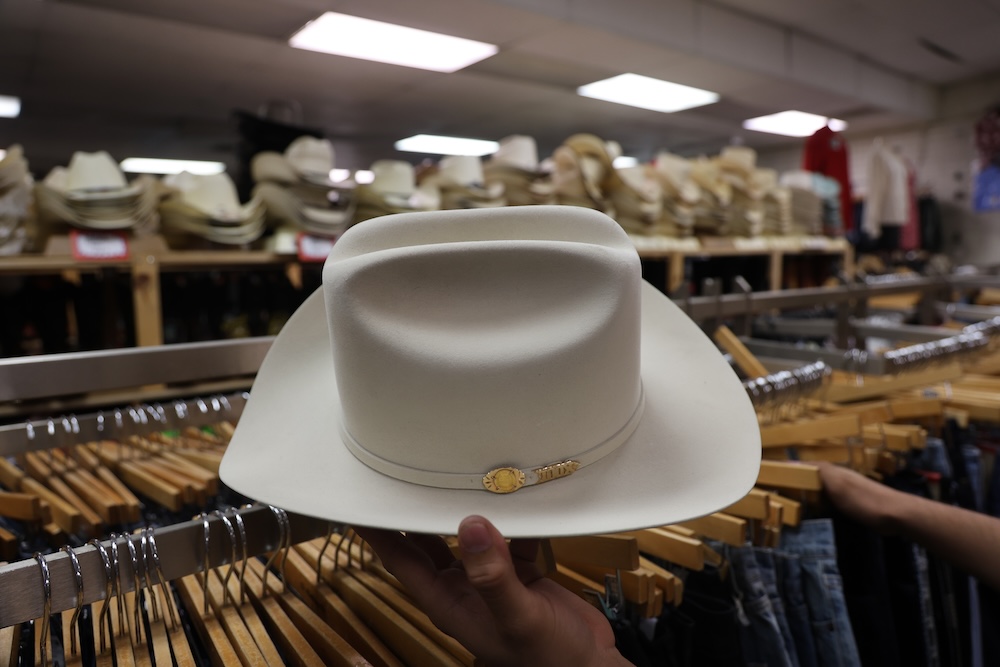
Hernandez explained the business grew because he was willing to make things other people wouldn’t. He would sell boots, hats, clothing, bolo ties, saddles, belt buckles, and anything else a customer was looking for. Today, customers can also have boots stretched and hats shaped. Belts cost roughly $25 to $180, hats range from $50 to $3,500, and custom boots can start around $2,000 and reach $8,000.
Casillas noted that having different price points is important because not every customer wants or can afford an expensive custom pair.
A boot built around the customer
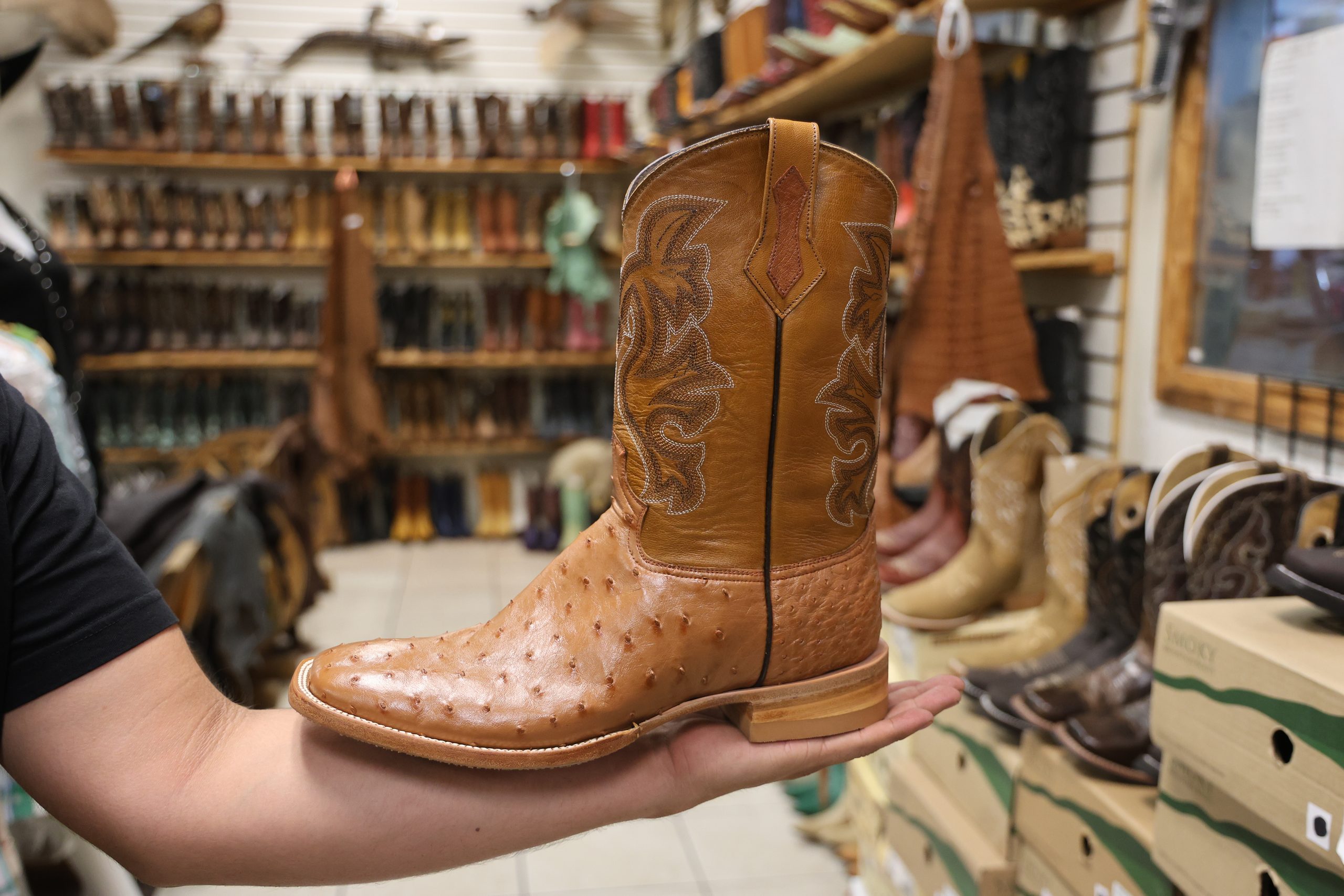
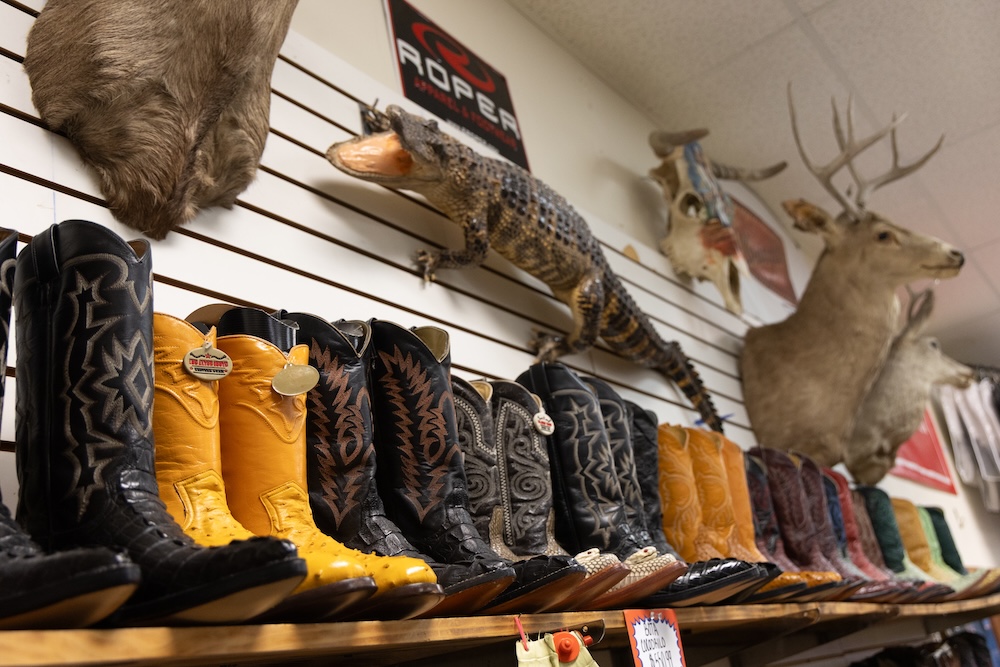
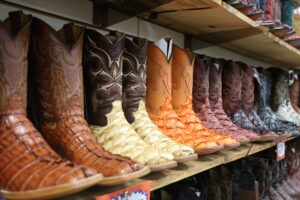
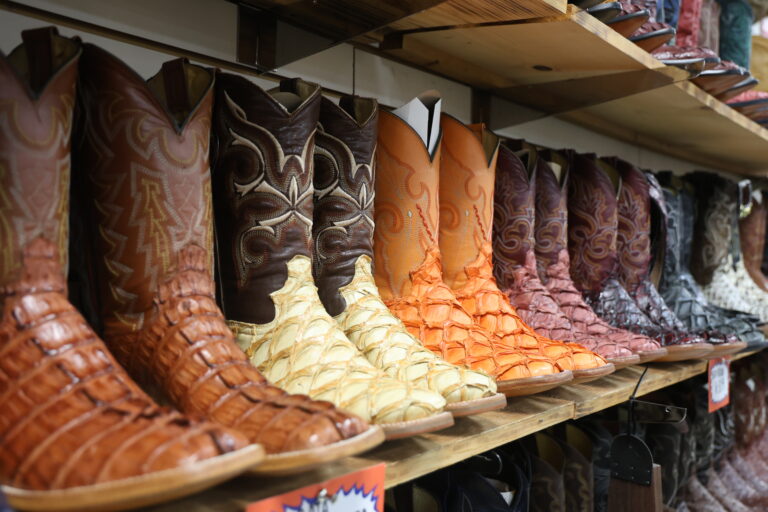
Planning for custom boots begins long before the customer pulls the finished pair onto their feet. Customers choose the skin, toe shape, welt, shaft color, stitching and other details. The hide selection can include cowhide, shark, caiman, American alligator, ostrich, and other exotic leathers.
Casillas explained that the process begins with understanding exactly what the customer wants, making sure the boots actually fit because a customer’s shoe size is only a starting point.
“I’ve never, never given a client a boot that they say the size they are,” Casillas said. “I like to be detailed and I want to make what they want and how they feel it.”
Once a client picks out the leather, Casillas measures, hand-cuts and shapes the vamp (top of the foot) of the boot at the shop to ensure it fits precisely to their foot. With the foundational fitting complete, he relays the measurements and preferences to Botas El Jibaro bootmakers.
From there, the boot goes through a long series of construction steps involving stretching, gluing, stitching and nailing the leather into place. The welt is added, followed by the heel. The finished boot is then dyed, polished and waxed.
Casillas estimates that roughly 160 individual processes can go into making a custom boot. The family’s average lead time is about a month and a half, although complicated measurements and designs can make the process longer.
“There’s so many steps,” Casillas emphasized. “That’s what the price comes from, the steps. It takes hours to make a boot.”
Even the heel requires extensive work, and can take up to a week to craft. It’s made from stacked layers of leather that are pressed and glued together, then nailed into place.
Leathers from all around the world
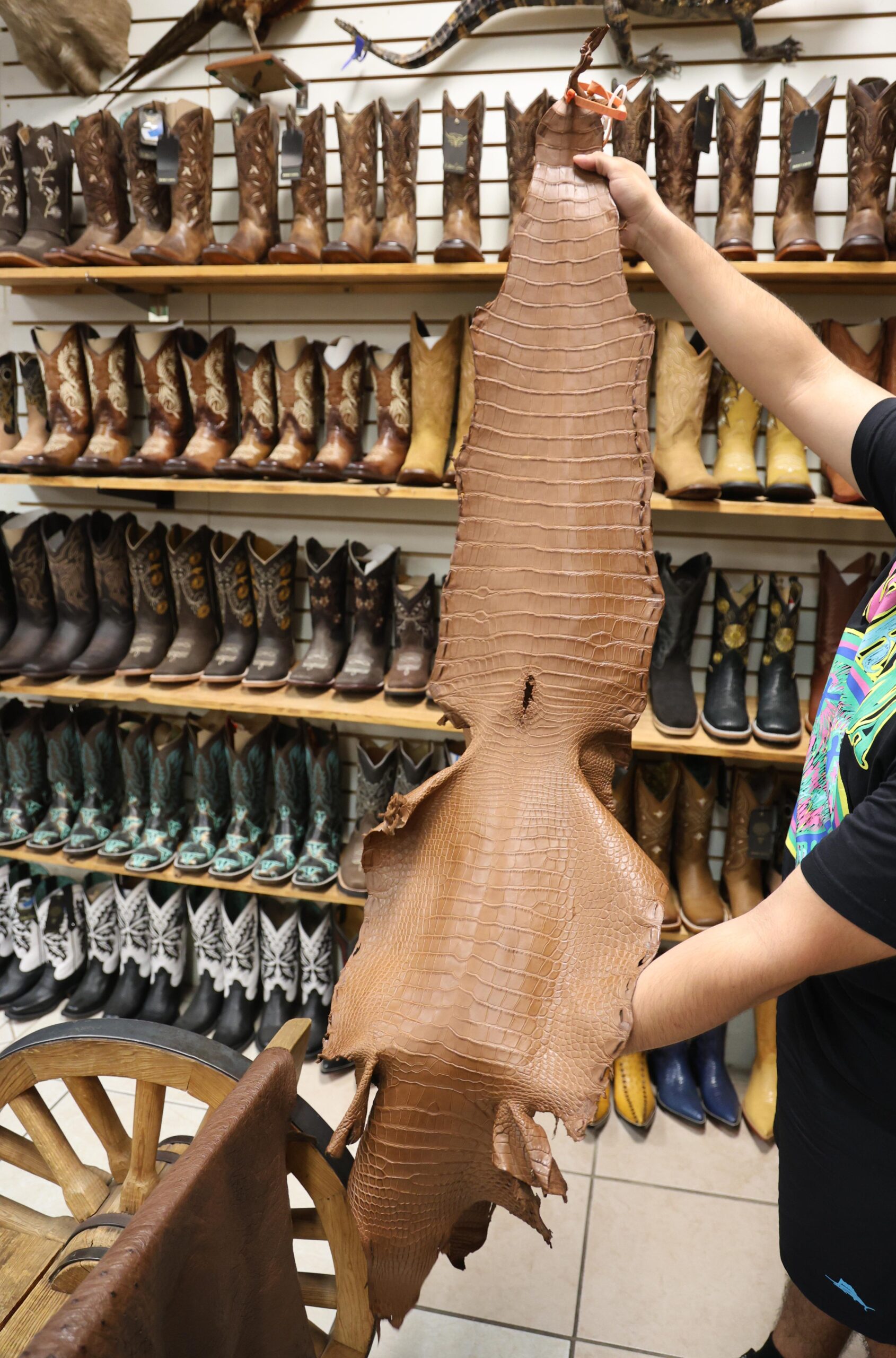
Most of the materials used in the boots come from suppliers in Texas, with skins sourced from different parts of the world, including South Africa and Argentina.
Casillas explains that exotic leather is graded according to quality. The family aims for the highest-grade materials available.
“Some people think, ‘Oh, alligator, all ostrich, all fish are all the same,’” Casillas said, “They’re not. They all have their grades and quality.”
Ostrich is one of the materials Casillas particularly enjoys working with. Although the skin is thin and soft, he notes that it is durable and molds well to the foot.
For alligator boots, customers can choose which part of the hide becomes the vamp. Different parts of the animal have different scale patterns, allowing customers to choose smaller or larger scales or the distinctive lines of the tail. The details are part of what makes a custom boot different from one purchased off a shelf.
“I think one important thing is that we’re all traditionally made. There’s no plastic, there’s no technology,” adds Casillas. “You can add a letter, you can add a number, that’s very meaningful to you. You can add your own personalization to it.”
Staying consistent through changes
The family’s bootmaking process has evolved since its opening its first store in 1995, but Botas El Jibaro remains committed to preserving its tradition by maintaining its core craftsmanship and methods while adapting to changes.
Bootmakers who once worked in-store in Arizona eventually moved with their families back home to El Paso and Arlington, drawn by the stronger demand in Texas. Rather than abandoning these relationships, Casillas’ family sent its machinery to the bootmakers, allowing them to continue their craft for Botas El Jibaro in Texas.
The Arizona shop remains involved in the process where Ramiro works with customers, prepares the skins and vamp, takes measurements and communicates specifications to the bootmakers.
For Casillas, keeping the family’s standards consistent is one of the hardest parts of the business.
“My biggest challenge is trying to stay super, super consistent,” he explained. “In the quality aspect of what we do, trying to stay consistent. It’s really hard because there’s always something that’s gonna go wrong.”
He emphasized that the key is seeing problems as learning opportunities rather than roadblocks.
Connection with customers
The family’s relationship with its customers is just as important to Casillas as the boots themselves.
Many customers return every month or two for clothing and other merchandise. Some come back every year for another pair of boots. Customers also come to the store for important occasions, including weddings, quinceañeras, and other special occasions.
“It’s a beautiful thing to see, and to be, to have the honor and opportunity to make something special for them, for any special occasion, makes me even more proud of what we do,” Casillas recalled.
Some customers order matching boots for special events to capture a moment in time. If you visit Botas El Jibaro, on the wall is a picture of one of their most special customers: Jenni Rivera, a legendary Mexican-American singer, for whom they made custom heels. They have also made custom boots for Juan Sebastian, a seven-time Latin Grammy Award winner and five-time Grammy Award winner.
“Since we’re close to the airport, we have people from all over the world,” Casillas said, mentioning customers from British Columbia, Finland, Switzerland, and Japan. “I love meeting everyone. It’s the best part of my job, to be honest. To know different cultures, to see different traditions, it’s fun.”
Connecting with heritage
Allan Cabrero, a customer from Washington, D.C., found the store while visiting Phoenix for a conference. He had searched online for Western stores and decided to visit after seeing the store’s reviews.
“I really like Ramiro and his family,” Cabrero explained. “They’re very warm and welcoming, and they kind of took their time explaining stuff to me and helping select a pair that I wanted.”
Cabrero, who usually wears a size 13, explained that finding boots that fit can be difficult. At the store, Casillas measured his feet and walked him through the custom process.
“Since it’s all new to me, I defaulted to his (Ramiro’s) expertise,” Cabrero explained. “He kind of broke it down, like this is the high-quality aspect of it.”
The guidance made an impression on Cebrero, who was pleased with the finished pair. “The boots fit like a glove,” he recalled. “It’s super comfortable. I can wear them constantly.”
For him, the boots also represent something beyond clothing. His parents immigrated from Mexico, and he shared that his grandfather and uncles wore western boots. Buying a custom pair gave him a way to reconnect with that part of his family background and his heritage.
Cabrero has returned to Ramiro because he knows what to expect.
“I already knew what to expect from him is openness and his thoughtfulness,” he explained, referring to Casillas. “I wanted to be a repeat customer.”
A tradition shared across generations
Casillas, who is now 22 years old, admitted that working alongside his grandfather has given him more than a job. It has given him access to knowledge that cannot easily be learned from a manual.
“You get the experience, you get the knowledge,” Casillas said.
He explained that his grandfather could always find a solution to a problem even when Casillas couldn’t. When Casillas was younger, he struggled to shape a heel cap using a sole sander machine, especially when transforming a straight heel into a cowboy heel. Hernandez showed him how to hold the boot at the proper angle and move it vertically to achieve the desired shape. He also taught Casillas how to use the machine to smooth the edges safely without losing his group. Through his grandfather’s guidance, Casillas mastered not just the technical skills of bootmaking, but the patience required to solve complex problems.
Hernandez expressed his hope to eventually leave the business to Casillas once he has learned everything he needs to know. It’s a future Casillas wants.
“I hope to see myself still here, you know grinding away and doing what I love,” Casillas said.
Over the decades, the family’s central idea has remained: make carefully handcrafted goods, make it personal and build relationships with the people who wear it.
For Casillas, it all leads back to his home, his box full of leather, where with wide-eyes, he watched his family work around him.