
ASU Cronkite School
All Podcasts
Podcast episodes on the business topics ASU’s Cronkite School students find most salient.
Episodes
- Marketing Edition
- S:07
- E:02
- (22 min)
-
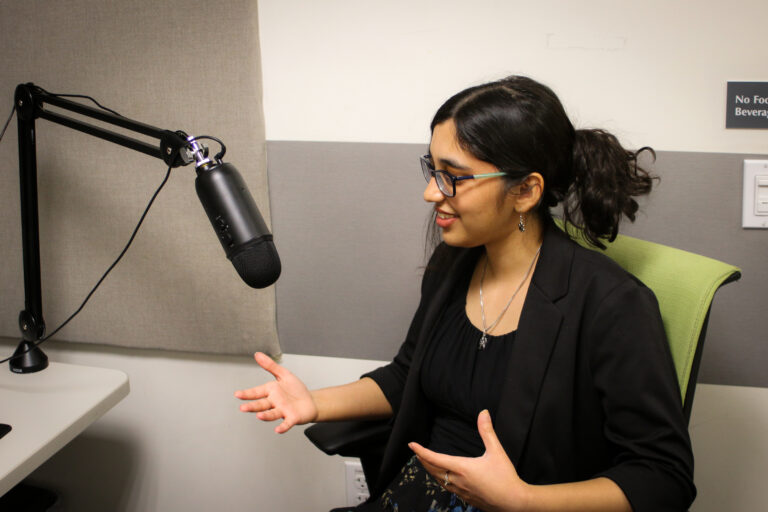
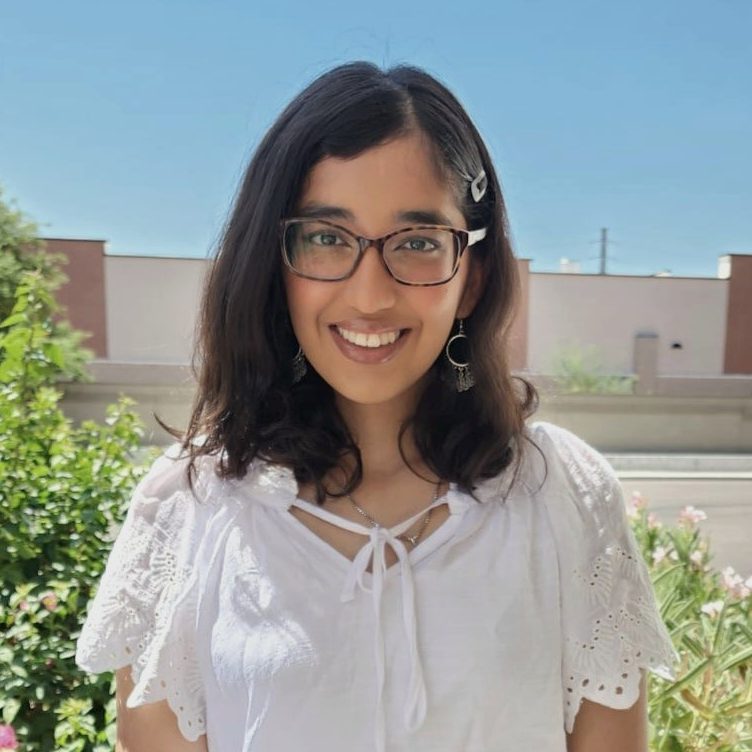 Ananya Bhargava
As our reliance on technology and data systems grows, so do the avenues through which corporations can harvest our information. In this episode, Ananya Bhargava interviews Joseph Ryoo, an Assistant Professor of Marketing at Arizona State University and expert in unstructured data analysis. Dr. Ryoo describes the techniques businesses use to collect and utilize data, the differences between what is legal and what is ethical regarding consumer privacy, and how business students can navigate data-driven marketing in the future.
- Marketing Edition
- S:07
- E:01
- (34 min)
-
Ananya Bhargava
<iframe title=”The ethics of AI and data in marketing” allowtransparency=”true” height=”150″ width=”100%” style=”border: none; min-width: min(100%, 430px);height:150px;” scrolling=”no” data-name=”pb-iframe-player” src=”https://www.podbean.com/player-v2/?i=9y7qw-167c4f6-pb&from=pb6admin&share=1&download=1&rtl=0&fonts=Arial&skin=1&font-color=auto&logo_link=episode_page&btn-skin=7″ loading=”lazy”></iframe>
- Law Edition
- S:06
- E:02
- (24 min)
-
 Mackenzie Joy Brennan
SAG-AFTRA is still striking against the AMPTP (Alliance of Motion Picture and Television Producers – movie studios, big streaming corporations, etc.) even as the writer’s union has reached its own agreement with the studios this week. In this episode, Mackenzie Joy-Brennan talked to SAG member Marie Cecile Anderson — an actor, comedian, and musician based in Nashville — about the strike decision, the demands union members are asking for, and what life is like as a working union actor, even while on strike.
- Law Edition
- S:06
- E:01
- (32 min)
-
Mackenzie Joy Brennan
As the entertainment industry strikes continue, Mackenzie Joy-Brennan has a chat with Hollywood costume designer Nicole Suerez Jones whose local IATSE (International Alliance of Theatrical Stage Employees) unions aren’t on strike, but are still suffering the effects of the current dual strikes in Hollywood. Nicole talks studio executive greed, working conditions, artificial intelligence, and what it means to be functioning in an industry that appears to be at an impasse.
- We Mean Business
- S:05
- E:04
- (13 min)
-
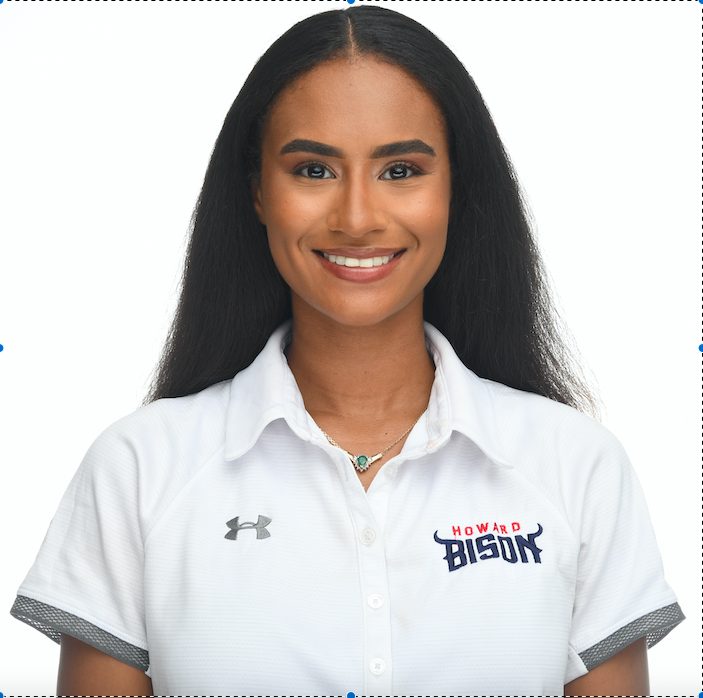 Janaé Bradford
The Phoenix Valley was packed with visitors for Super Bowl LVII, but does a packed city equal extra economic activity? Janaé Bradford interviews Kelly Phillips Erb, an expert on tax law who has written for and been interviewed by a variety of media outlets. She is currently a tax contributor for Forbes and a Tax Counsel for White & Williams, LLP.
Phillips Erb breaks down how local taxpayers contribute to big sporting events but may not be seeing the dividends they were promised. From tax offsets and exemptions, there are a lot of ways that sporting leagues negotiate with local districts before awarding an Olympic, World Cup, or Super Bowl bid.
To keep up with Phillips Erb’s work, visit taxgirl.com and read her recent work for Forbes titled ‘The Super Bowl doesn’t always produce super-sized revenues for local taxpayers.’
- We Mean Business
- S:05
- E:03
- (11 min)
-
Janaé Bradford
When is it okay to start talking about the financial cost of a game not played? Steven Watkins, a reporter for the Cincinnati Business Courier, was reporting on the Bengals/Bills game live when Damar Hamlin was struck in the chest and halted the NFL. Watkins shares with Janaé Bradford how he reacted as a journalist who covers the business of sports at a local business journal.
Watkins has decades of experience covering the business side of sports and shares tips with aspiring sports journalists on how they can fill a much-needed role in the industry by not shying away from the financials.
- We Mean Business
- S:05
- E:02
- (9 min)
-
Janaé Bradford
Ever wonder what it is like covering the biggest college football game of the season? Janaé Bradford invited Amanda Christovich from FrontOffice Sports to speak with her about her experience covering the business of the big game.
Covering college football isn’t just about covering the X’s and O’s. College football has become an enterprise in itself that reporters should not shy away from covering. Christovich tells us how she started covering the business of sports and how businesses have noticed the significant demand for college football. She notes that reporting on the college championship continues long after the game has been called.
Christovich covers everything from gender equity and sports labor issues to name, image, and likeness — and was recently named one of LinkedIn’s top five creators of the week for my NIL stories. Check out more by Christovich on Twitter, FrontOffice Sports, or her website.
- How They Did It
- S:05
- E:01
- (12 min)
-
Janaé Bradford
Janaé Bradford interviews Bloomberg reporters Caleb Melby and Polly Mosendz, two members of the bronze award-winning team for their investigation ‘Questionable Practices.’ Their investigation brings the first important revelations about the largest medical mental health startup, Cerebral, and its effort to bring telemedicine techniques to mental healthcare.
Bloomberg reporters found a lack of delicate consideration assessment from the million-dollar business when prescribing medication to their patients. Listen to what the reporters had to say about what it took to make this investigation happen.
- We Mean Business
- S:04
- E:05
- (9 min)
-
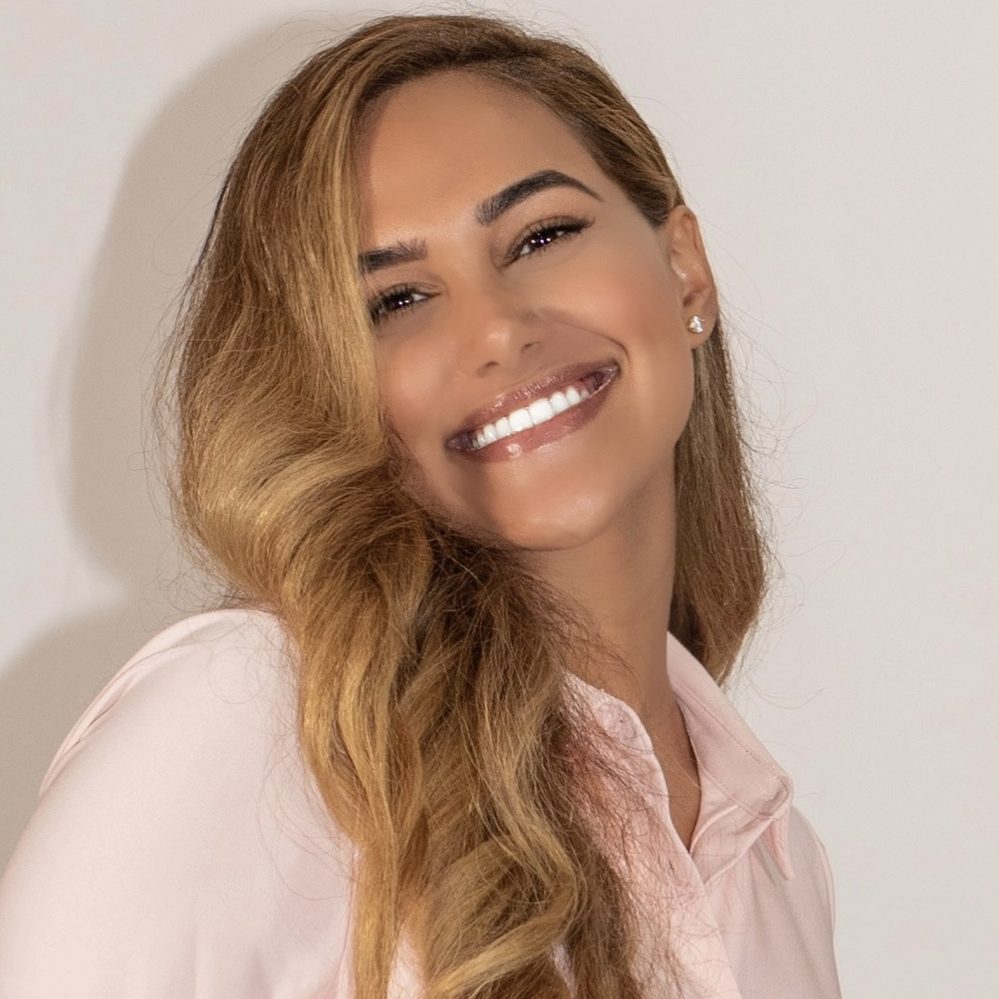 Ruby Arora
For her last episode, Ruby interviews Jeff Timmermans, Director of the Reynolds Center. Ruby asks poignant questions about what is needed from students looking to get into business journalism and why students should consider the field. Jeff shares with us the importance of business journalism and how you don’t need a finance background to report on and cover the business beat.
- We Mean Business
- S:04
- E:04
- (11 min)
-
Ruby Arora
Ruby interviews Kristen Gilger, co-author of ‘There’s no crying in newsrooms,’ on what it was like as a woman in broadcast journalism 30 years ago compared to today. Kristen shares insights on how her expectations and hope of greater equity have unfortunately not matched up with reality and reminds women in the business to remember that they are never alone.
- We Mean Business
- S:04
- E:03
- (9 min)
-
Ruby Arora
Numbers are the language of the world. Ruby interviews Steve Doig, experienced data journalist and current ASU professor, on how working with data can be a business journalist’s superpower. Steve discusses how understanding data tools for smaller stories can prepare you for bigger stories that happen near you or in your beat.
- We Mean Business
- S:04
- E:02
- (9 min)
-
Ruby Arora
Ruby Arora interviews Todd Merkow, first general manager of FOX Sports Arizona and current strategic and operational consultant who also teaches sports journalism majors at the Cronkite School of Journalism. Ruby and Todd discuss Amazon emerging into NFL streaming and what journalists should be aware of and what to look out for in the future of sports streaming.
- We Mean Business
- S:04
- E:01
- (8 min)
-
Ruby Arora
Ruby Arora interviews Susan Lisovicz on how journalists can prepare to be on camera and why business journalism is such an important field for all journalists to understand.
- How They Did It
- S:03
- E:19
- (13 min)
-
 Jenna Miller
In this episode, host Jenna Miller speaks with Los Angeles Times reporter Harriet Ryan and editor Matt Lait, to discuss their award-winning investigation, “Oxycontin’s 12-hour Problem.” The two reveal how doctors were not only were many doctors being investigated for overprescribing a drug, they were often linked to bad pharmacies that lacked state oversight. The pair share some tips for young journalists and what decisions they made that helped humanize the business story. Their project took home the Bronze Award at the 2016 Barlett and Steele Awards for Investigative Journalism.
- How They Did It
- S:03
- E:18
- (10 min)
-
Jenna Miller
Christopher Weaver of the Wall Street Journal spoke with Jenna Miller of the Reynolds Center to discuss his work with the award-winning investigation, “Testing Theranos.” This project took home the Silver Award at the 2016 Barlett and Steele Awards for Investigative Journalism. Weaver explains how the 10-month investigation began and the challenges they faced questioning a company that had become a media-darling. He also explains some of the impact the investigation had not only for the company, but for many of the company’s investors, employees, and clients.
- How They Did It
- S:03
- E:17
- (14 min)
-
Jenna Miller
Bastian Obermayer of the Munich based paper Süddeutsche Zeitung and Gerard Ryle, Director of the International Consortium of Investigative Journalists, spoke with Jenna Miller to discuss their work on the award-winning “Panama Papers.” Their organizations, along with more than 100 other media partners, took home the Gold Award at the 2016 Barlett and Steele Awards for Investigative Journalism. They discuss how the investigation began and what it took for so many journalists across the globe to collaborate on such a large investigation.
- How To Cover Money
- S:03
- E:16
- (8 min)
-
Jenna Miller
In this episode, hosted by Jenna Miller, Business journalism professors Karen Blumenthal, Andrew Cassel and Keith Herndon share their tips for engaging students in class. These instructors explain the creative way they encourage students to interact with businesses they don’t already have a connection to and the importance of reading other business stories, especially in their own communities. They originally shared these tips during Reynolds Week 2016.
- How To Cover Money
- S:03
- E:15
- (13 min)
-
Jenna Miller
The How to Cover Money podcast is back with Jenna Miller as this episode’s host. W.P. Carey School of Business professor Philip Drake and Bloomberg’s Tom Contiliano introduce business reporters to the art of reading financial statements. They share some of their tips for using those statements to investigate a company’s performance, past transactions, and cash flow to understand how well a company is really doing.
- How To Cover Money
- S:03
- E:14
- (13 min)
-
 Megan Calcote
In this episode, hosted by Megan Calcote, Brandon Quester and Evan Wyloge of the Arizona Center for Investigative Reporting share their tips for finding and using census data. Wyloge and Quester share their experiences searching through large datasets and what they have found to be more useful to drill down the numbers to your local area. They also share the websites and reports they find to be the most useful for story inspiration. They originally shared these tips during Reynolds Week 2016.
To read the AZCIR’s four-part investigation on hazardous chemicals, click below:
- How They Did It
- S:03
- E:13
- (11 min)
-
Megan Calcote
In this episode, hosted by Megan Calcote, Katherine Fitzgerald and Eddie Keller interview Robin McDowell and Martha Mendoza of the Associated Press about their 2015 Barlett and Steele Gold award-winning investigation “Fish Slavery.” McDowell and Mendoza explain what sparked this investigation, some of the decisions they had to make to protect their sources before publication, and what it took to conduct award-winning work.